Adrián Guerrero
Adrián Guerrero is a Mexican artist who uses various supports and materials such as photography, video, drawing, sculpture, and painting to create pieces and objects, starting from the simple and everyday, which reinterpret his concerns such as time, spatial relationships, and the phenomenology of things themselves. His work is part of various collections such as the Louis Vuitton Foundation and he has participated in both solo and group exhibitions since 2004. He has developed his career in Mexico as well as in the United States, Singapore, Korea, and Europe.
Financial information
Reacomodos JCO
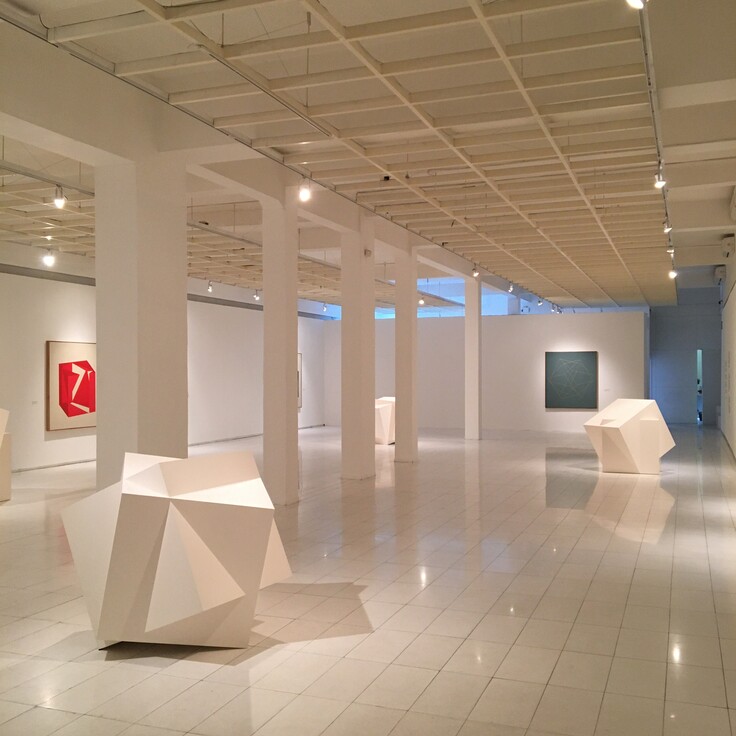
JCO rearrangements are part of the deconstruction of José Clemente Orozco's Pueblo Mexicano as a strategy of analysis rather than fragmentation. The image is understood as a system where geometry, rhythm, and tension organize its internal structure. By isolating and reorganizing its elements, the underlying frameworks become visible, in line with Jay Hambidge's dynamic symmetry, adopted by Orozco as a method. Beauty, thus, is revealed not only as a symbol but as a construction. The resulting pieces do not seek to reconstruct the original image, but to generate new visual relationships in dialogue with Mexican modernity and its echoes in architecture and photography. In these reconfigurations, resonances appear with Barragán, González Gortázar, or Figueroa, evidencing that every work is part of a continuous system. Deconstruction is then proposed as a form of continuity: a way of understanding the image as an open network in time.
Simetría dinámica
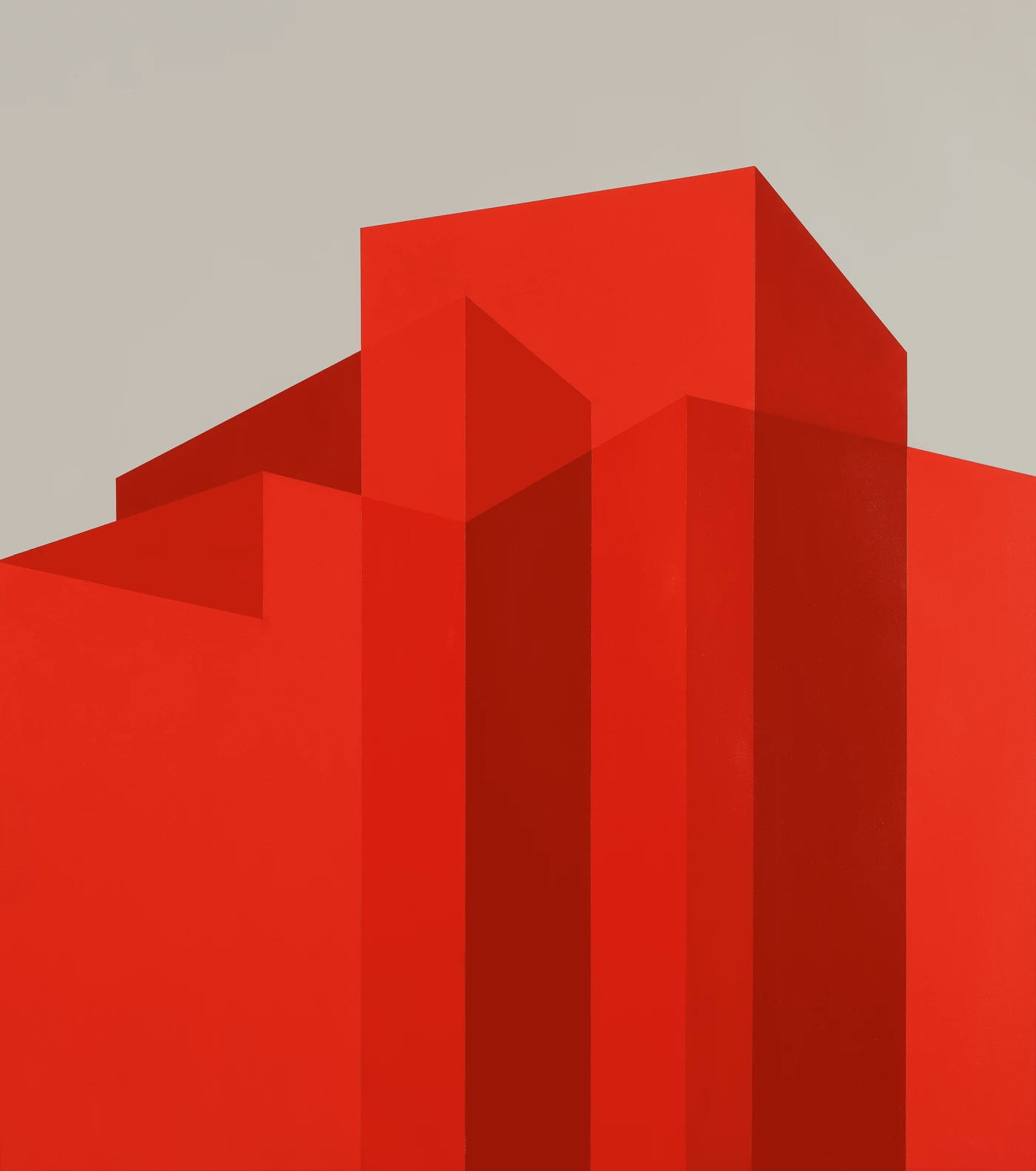
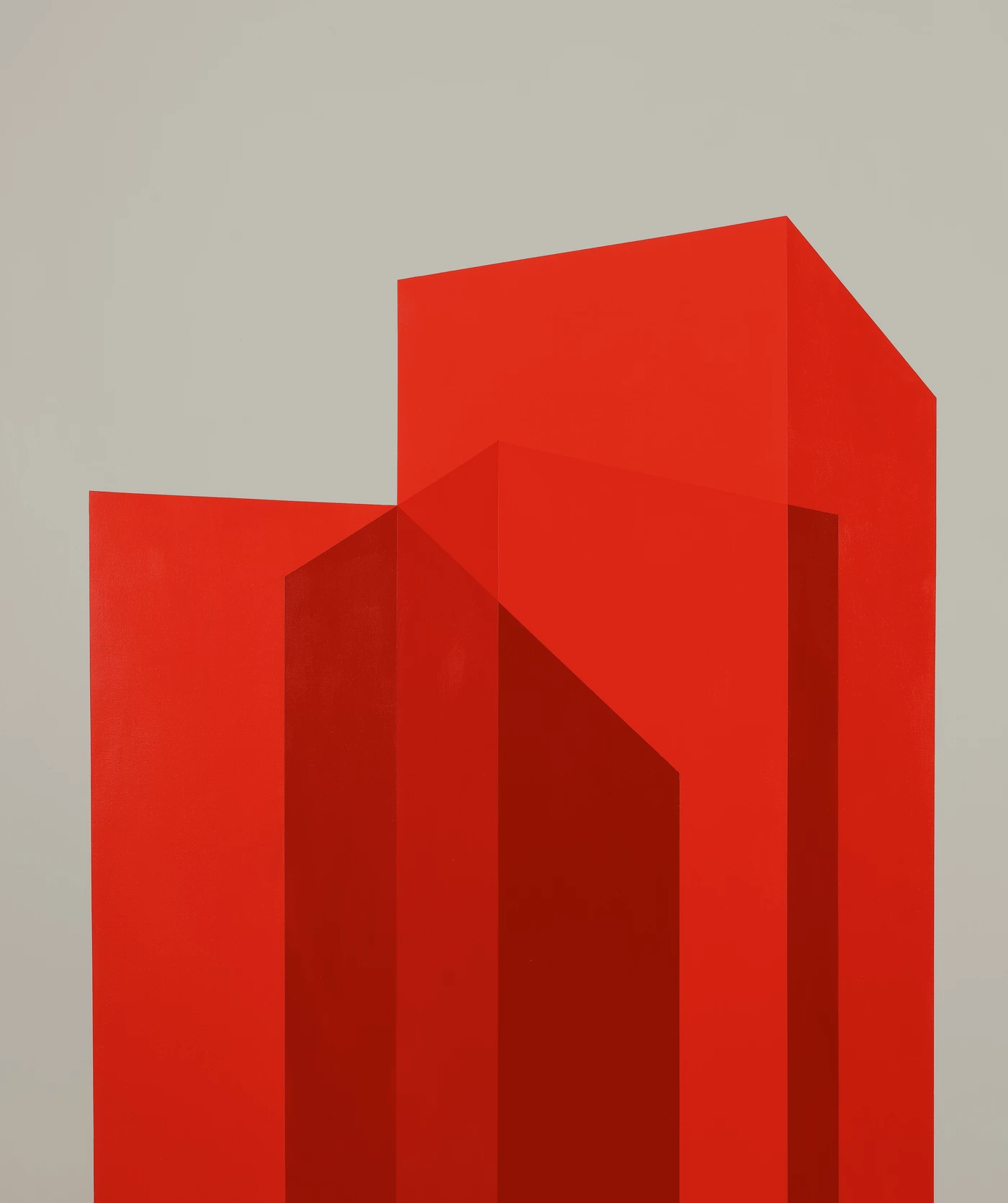
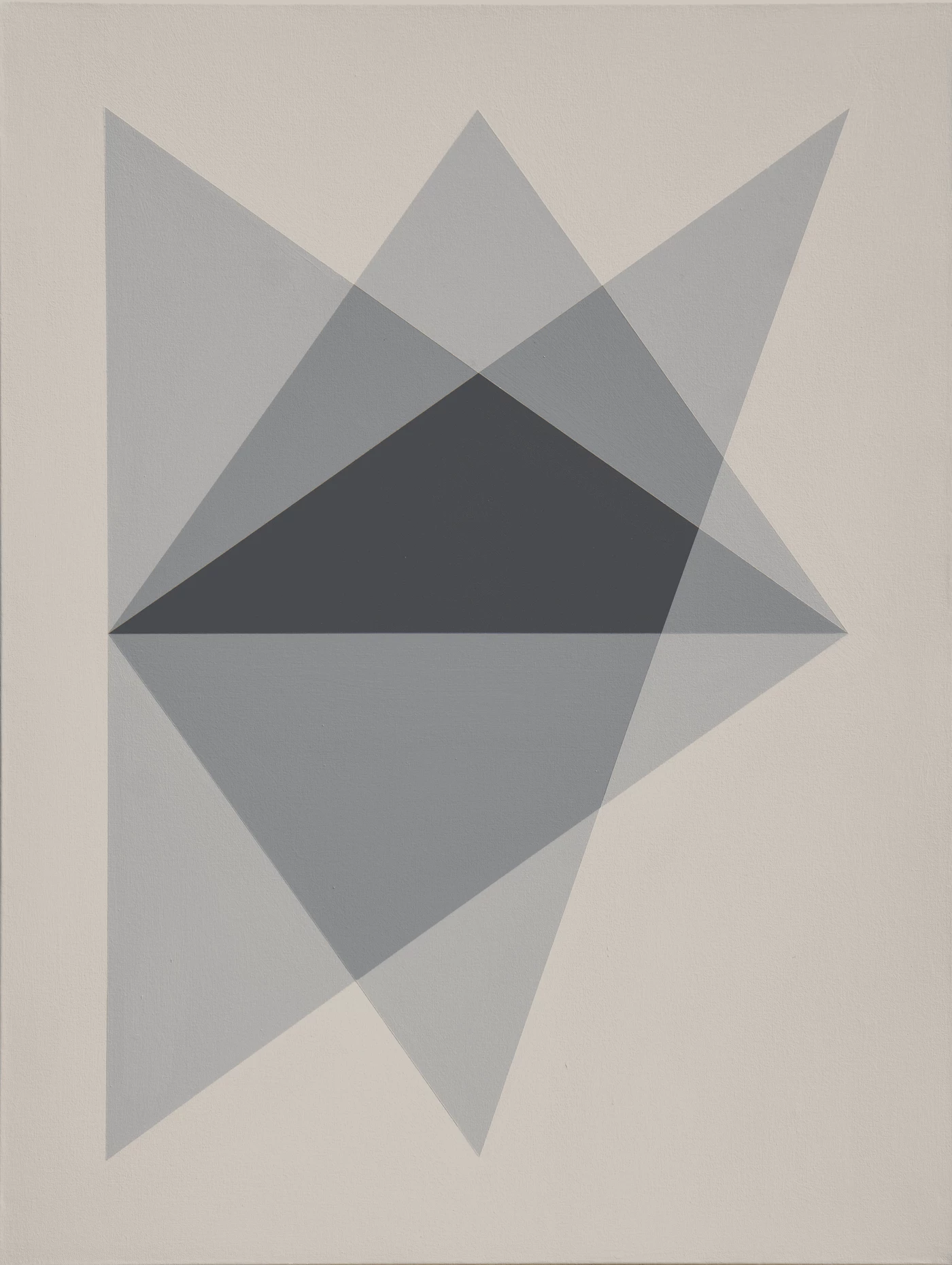
Dynamic Symmetries takes as its starting point José Clemente Orozco's encounter with Jay Hambidge's theory during his stay in New York, understood not as a style, but as a method of visual organization. This theory proposed a structure based on geometric proportions and repetitions capable of generating coherence and beauty in the image. In this series, Adrián Guerrero revisits this principle to explore art as an active system, where geometry does not fix form, but articulates it. Through deconstruction, the invisible structures that support Orozco's compositions are isolated, displaced, and reconfigured, acquiring a mobile and open condition. Geometries cease to be a stable framework to become elements in tension, capable of generating new relationships and interpretations. The series thus proposes a reactivation of dynamic symmetry: not as a closed order, but as a constantly transforming field of possibilities.
Where is the People?
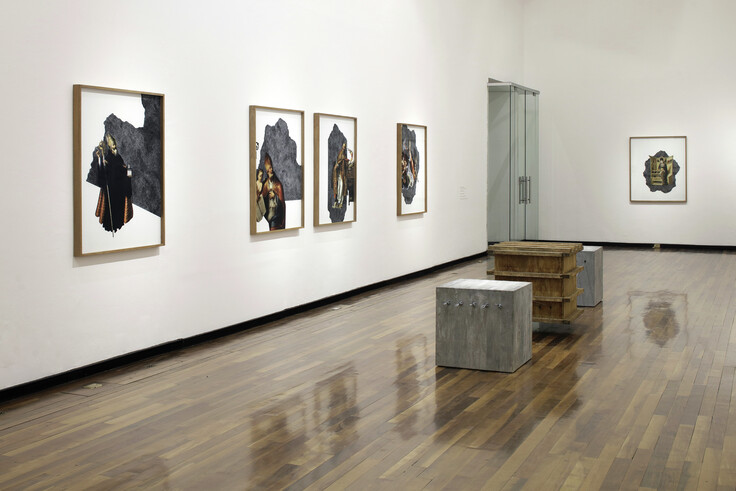
Inspired by José Clemente Orozco's lithograph "Pueblo Mexicano"—where shadow becomes light and darkness shines—Adrián Guerrero embarks on a process of deconstruction in search of that people, that culture, that social collective. From this analysis, a series of reflections emerge that Guerrero is quick to explore, moving from the philosophical to the material. Who truly represents the people? Throughout history, political powers have manipulated this concept lightly, using it as the basis for sensationalist discourses that justify impulsive or polarized policies, often far from the common interest. Is the people an inclusive space where we all fit, or is it simply an empty word, recurrent in political language but lacking real content?
Approach
While physics states that two bodies cannot occupy the same space at the same time, philosophical thought offers another vision: things can contain each other. Everything can be, at the same time, container and contained. This reflection invites us to think about coexistence beyond the physical. Ideas, objects, and experiences are not isolated, but intertwine and coexist within other structures, materials, or thoughts. In this sense, the work proposes a space where multiple meanings and presences coexist, questioning the boundaries between what is seen, what is thought, and what is inhabited.
Possible Landscapes
In this series, the artist reflects on the limits of human perception, understood from a philosophical perspective. The body is presented as the first filter: we only perceive what our mind chooses to focus on, while countless stimuli remain outside our conscious field. The pieces evoke moving landscapes, as if they were photographs taken during a journey, with the shutter open a few seconds longer. In the center of each work, the word "imperceptible" appears in relief, emphasizing what we normally do not see. By naming what goes unnoticed, the series invites us to make it present. Thus, it offers the viewer a pause and a new way of looking, in which the omitted, the faint, or the ephemeral reveal their poetic power.
Time is Nothing
In Time is Nothing, Adrián Guerrero transforms a philosophical question—inspired by Saint Augustine and the idea of the present as an elusive frontier—into a visual experience: time not as a measure, but as perception. His works open a space for pause and contemplation where the intangible can be felt, rather than explained. Through ink on paper, the artist repeats lines that intersect and densify to create chiaroscuros and volume, as if form emerged from duration: "forms made of time." Each piece is titled with the exact minutes of its execution, acting as a mirror of lived time. This sensitivity to line and rhythm is reinforced in his acclaimed collaboration with Montblanc.
Empty Trajectories
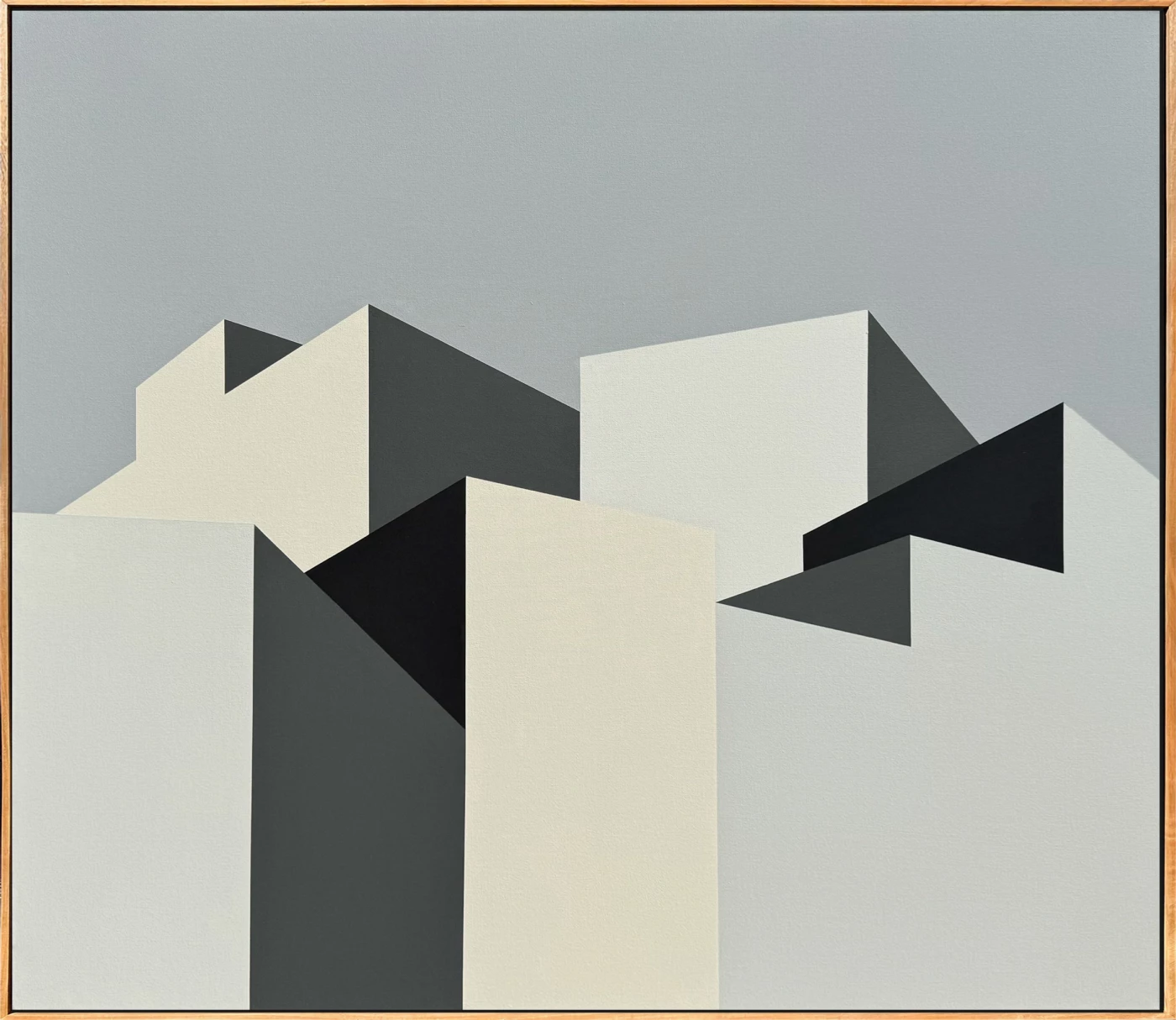
Empty Trajectories proposes emptiness as a journey: not as a lack, but as an active space where experience is constructed. In this series, Adrián Guerrero starts from the everyday and the essential to reflect on time, space, and perception, inviting the viewer to mentally complete what is not explicitly represented. The trajectory thus becomes a place of inner transit, where absence generates meaning. Emptiness functions as a threshold and not as an end. Each work proposes a tension between structure and silence, between the visible and the latent, activating an introspective rather than narrative experience. Empty Trajectories understands absence as contained presence, as a space where memory, duration, and thought accumulate, and where the gaze finds a place to pause and inhabit.
Contemplaries
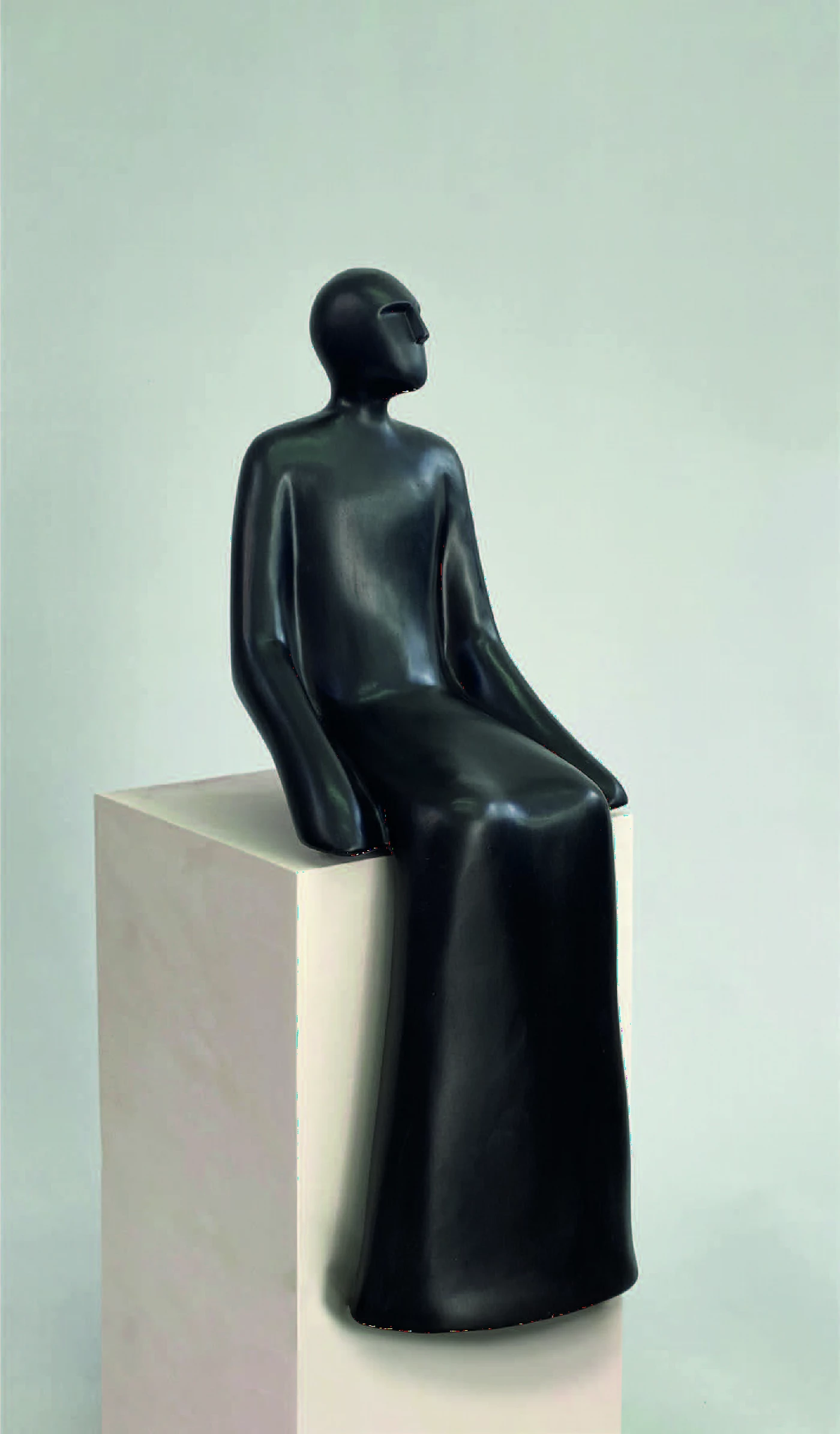
The "Contemplaries" series arises from a philosophical intuition: the human being is not an isolated entity, but a porous border where the inside and the outside touch, exchange, and become confused. Art, from this perspective, is not just a representation of the world, but an act of attuning oneself to it. A "contemplary" does not observe from the outside; they allow themselves to be permeated by what they contemplate.
Imposed Culture
The "Imposed Culture" series begins with the metaphor of the padlock as a symbol of cultural control, censorship, and imposed morality. Each sculpture represents a different way in which society conditions, regulates, or confines individual freedom, under the pretext of moral order.
Artistic career
Solo exhibitions
Collective exhibitions
Biennials and festivals
Fairs
Awards, grants and residencies
Collections
Analytical information
Market information
Signature value evolution
Professional artistic critique
Works by Adrián Guerrero in the catalogue: 106 minutos · 113 minutos · 140 minutos · 210 minutos · 390 minutos · 412 minutos · 427 minutos · 510 Minutos · 870 Minutos · 98 minutos · Abordaje X · Abordaje XIII · Abordaje XIV · De construcción del Morar · De construcción del Morar V · De construcción del Morar VI · De construcción del Morar VII · Empty trajectories I · Empty trajectories III · Empty trajectories IV · Imperceptible AA · Imperceptible AB · Imperceptible V · Maqueta de luz I · Moral · Possible landscape · Possible landscape V · Possible landscape VI · Reacomodos IV · Reacomodos JCO · Reacomodos JCO IX · Reacomodos V · Reacomodos VI · Reacomodos VII · Reacomodos VIII · Simetria dinámica III · Simetria dinámica IV · Simetria dinámica V · Simetria dinámica V · Simetria dinámica VII · Sitting contemplative · Vacío del Morar V · Where is the people IX · Where is the people VII | Adrián Guerrerolo · Where is the people XIX · Where is the people XX · Where is the people? VIII · Where is the people? X · Where is the people? XII · Where is the people? XIV · Where is the people? XXI · Where the village is XVIII