Elisa de la Torre
Young Madrid-based artist, focused on abstract painting. Elisa de la Torre's work is based on the exploration of fluid and crystallized painting through mineralization, which results in orographies of organic formations and textures related to elements of nature. Elisa has developed her work primarily in Spain to date, participating in fairs such as Art Madrid and Estampa, and belongs to collections such as Mensajeros por la Paz.
Financial information
[Mosses]
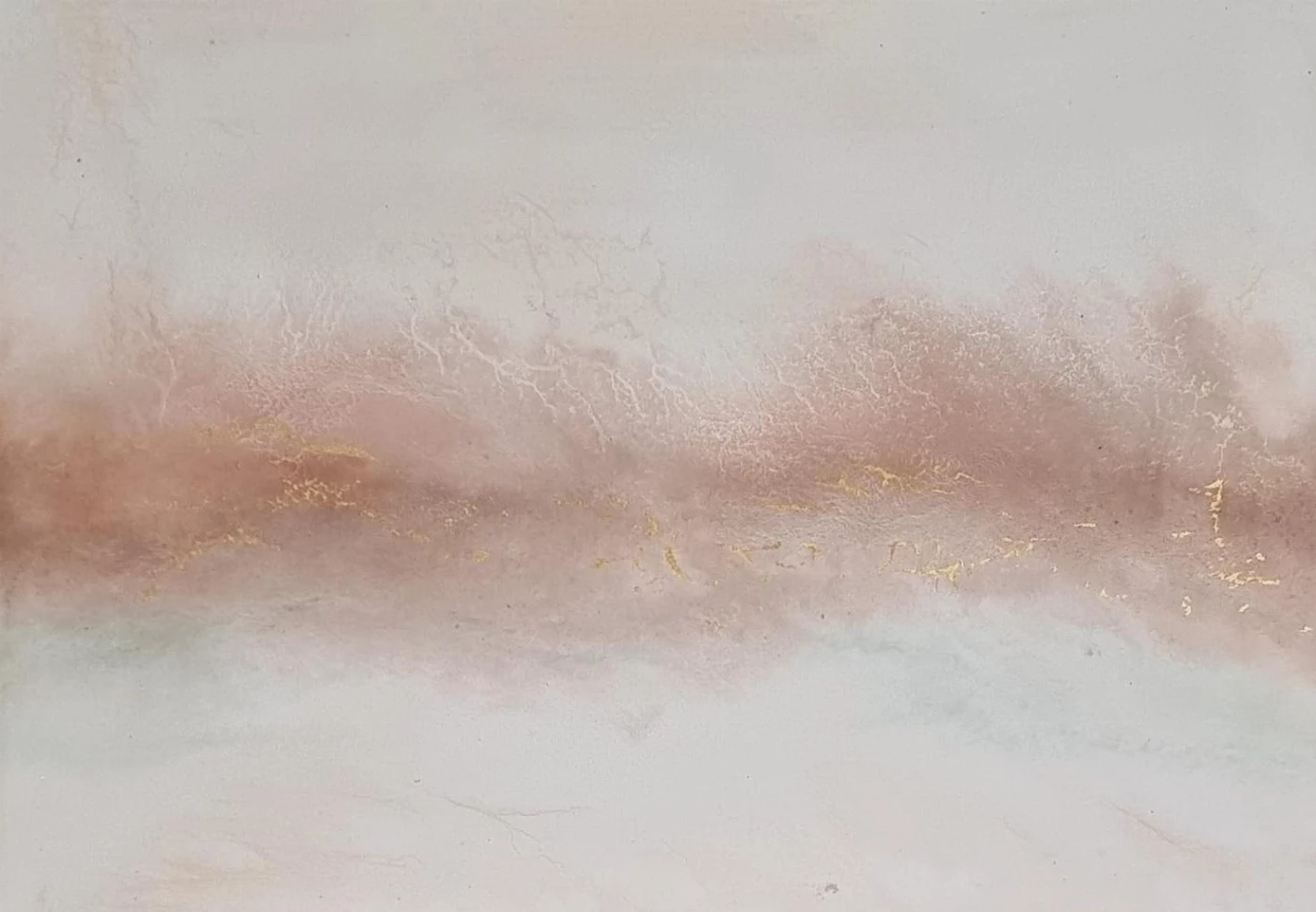
The mosses series establishes a subtle dialogue between cracked dryness and humid vitality of organic and earthy tones. Through fluid painting and crystallization, Elisa de la Torre creates textures that evoke the humidity and life of mosses, inviting the viewer to serene contemplation and to connect with deeply rooted sensory memories.
[Botanicals]
In the series Botanicals, Elisa de la Torre explores the language of nature through a pictorial abstraction that evokes vegetal forms, germinations, and organic structures. The artist works from the observation of the growth and transformation of the living, bringing the essence of the vegetal to the canvas without resorting to a literal representation. The works in this series are marked by the combination of fluid painting, crystallization, and the superposition of material layers that generate almost tactile textures. Greens, ochres, and earthy tones dominate the chromatic palette, in an attempt to capture the latent energy of the natural: buds, roots, leaves, or fragments of landscape that seem to stop in a moment of expansion.
[Reefs]
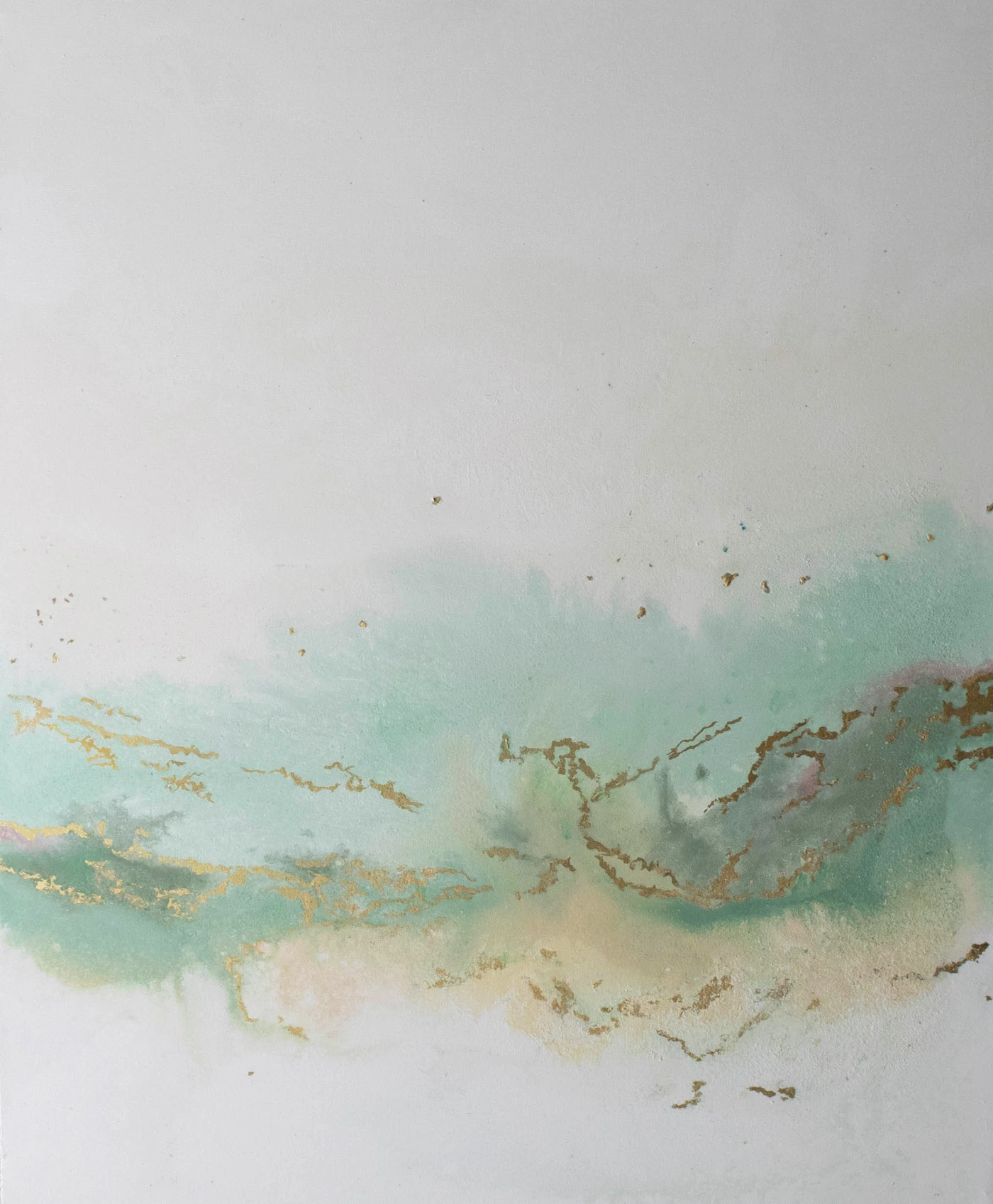
Elisa de la Torre's series Arrecifes delves into the idea of submerged landscapes and constantly transforming organic life. Through her characteristic use of fluid painting and crystallization, the artist constructs vibrant surfaces that evoke seabeds, corals, and natural structures typical of underwater ecosystems. Each piece is an abstract yet sensorial representation of these spaces, where color, texture, and material chance intertwine to create compositions full of movement and energy. The chromatic range usually incorporates shades of turquoise, ochre, green, and white, referring to both stone and water, generating a visual tension between the solid and the liquid.
[Sands]
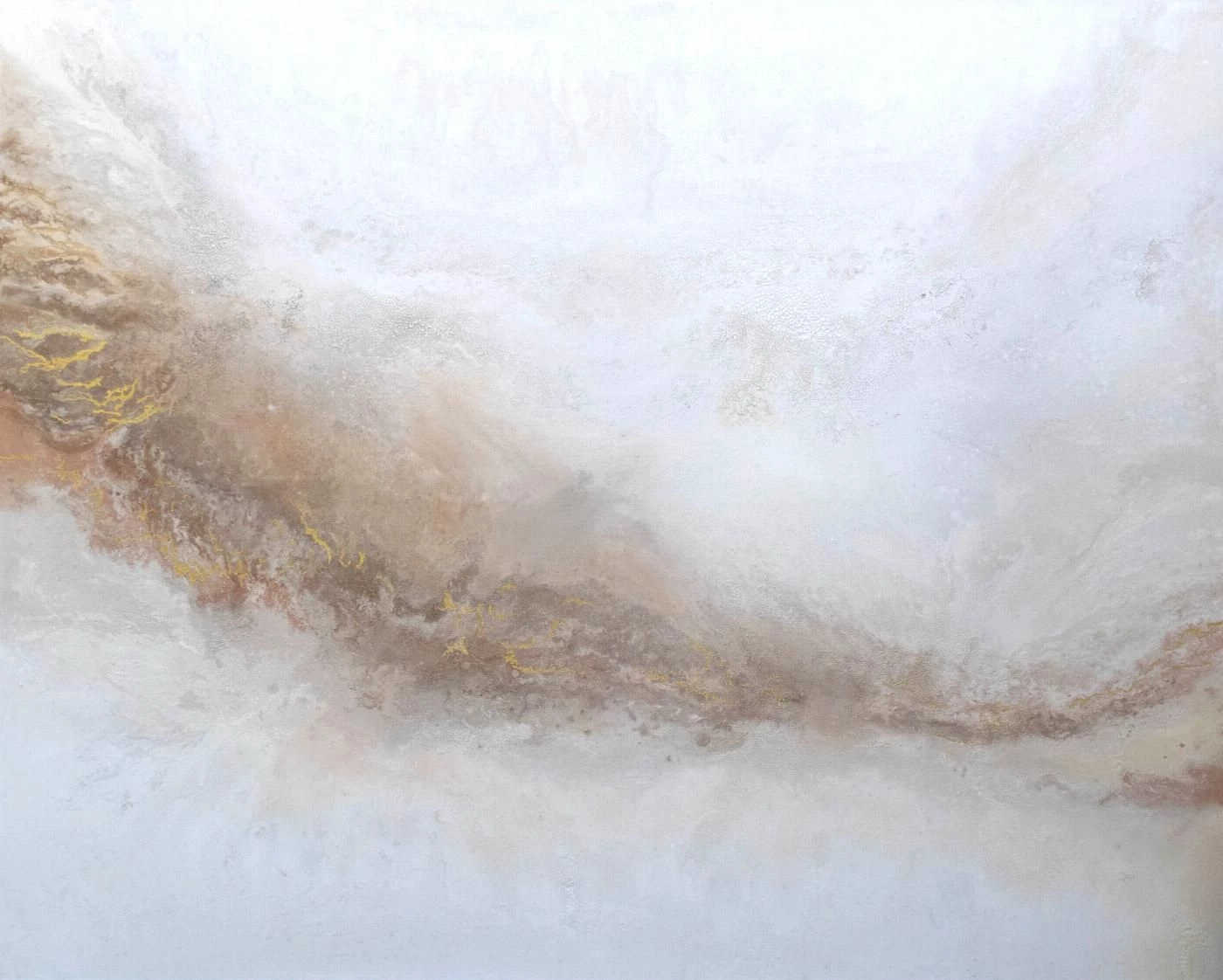
In "Arenas," the artist explores the pictorial abstraction of minerals through crystallized paint and the chemical reactions it creates, offering unique textures. The works immerse the viewer in an abstract world that tends towards figurative art, evoking desert landscapes and the beauty of imperfection.
[Waters]
[Alabasters]
[Arctic]
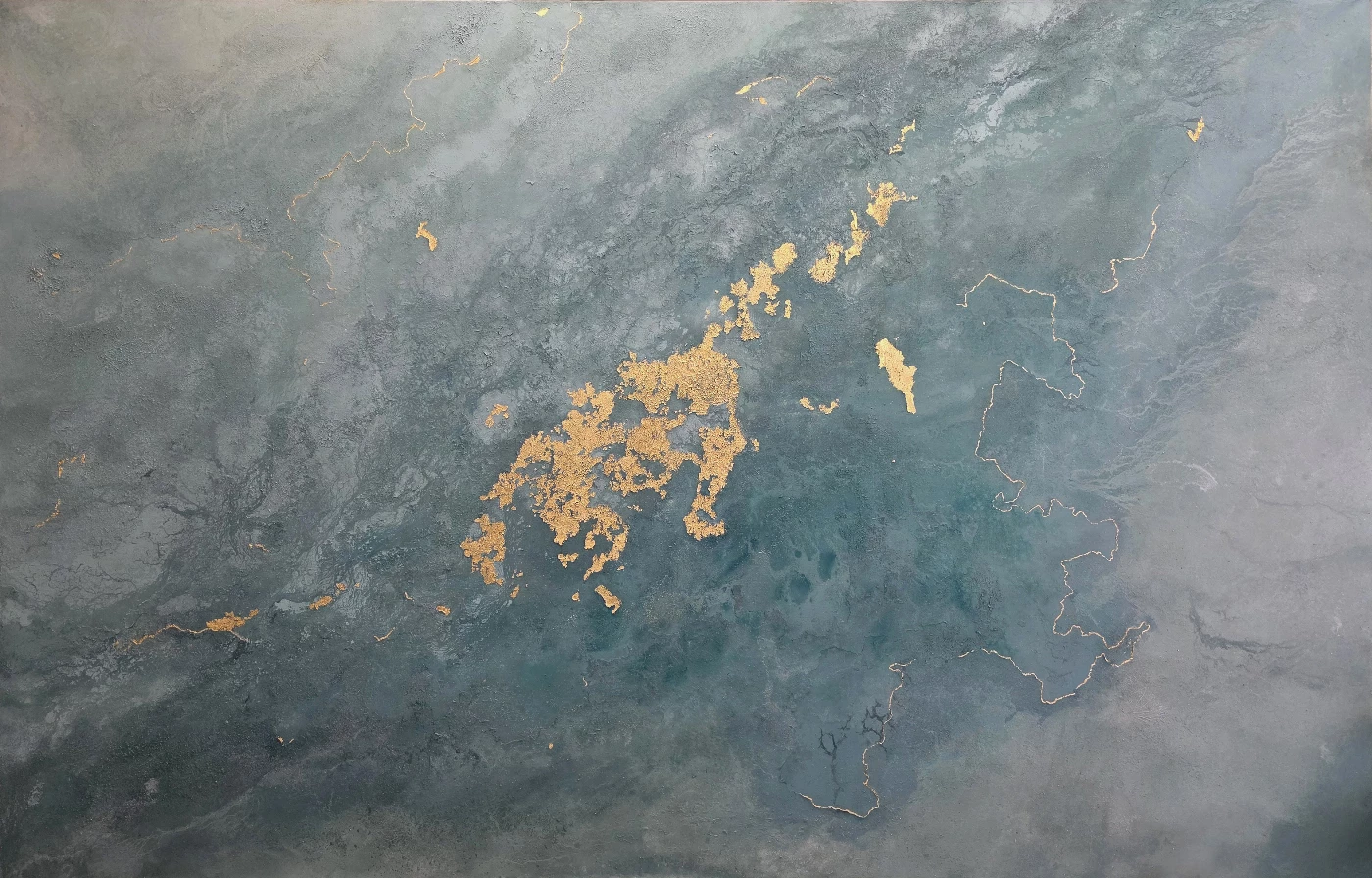
[Arctic] is a series that delves into the poetic abstraction of frozen landscapes seen from above. Each work emulates the vastness of brittle ice, as if we were floating over a fragile, ephemeral, and sublime territory. The cold white void is interrupted by golden cracks that herald the thaw: a visual metaphor for change, for what is leaving, and for what leaves a brilliant trace before disappearing. The cracks, crafted with 22-karat gold and silver, evoke the Japanese art of kintsugi: the act of beautifying fractures, of celebrating imperfection. Elisa de la Torre thus transforms abstraction into emotional landscape, where each texture, each random shape, and each insignificant glow can evoke an intimate memory, a sense of home.