Rubén Sánchez
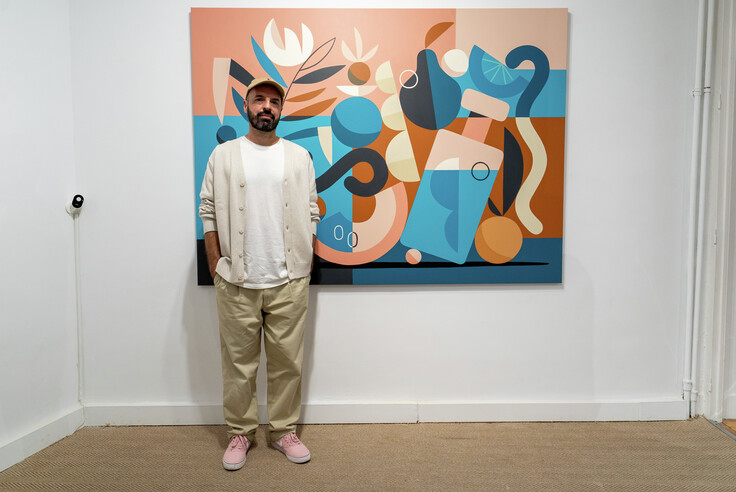
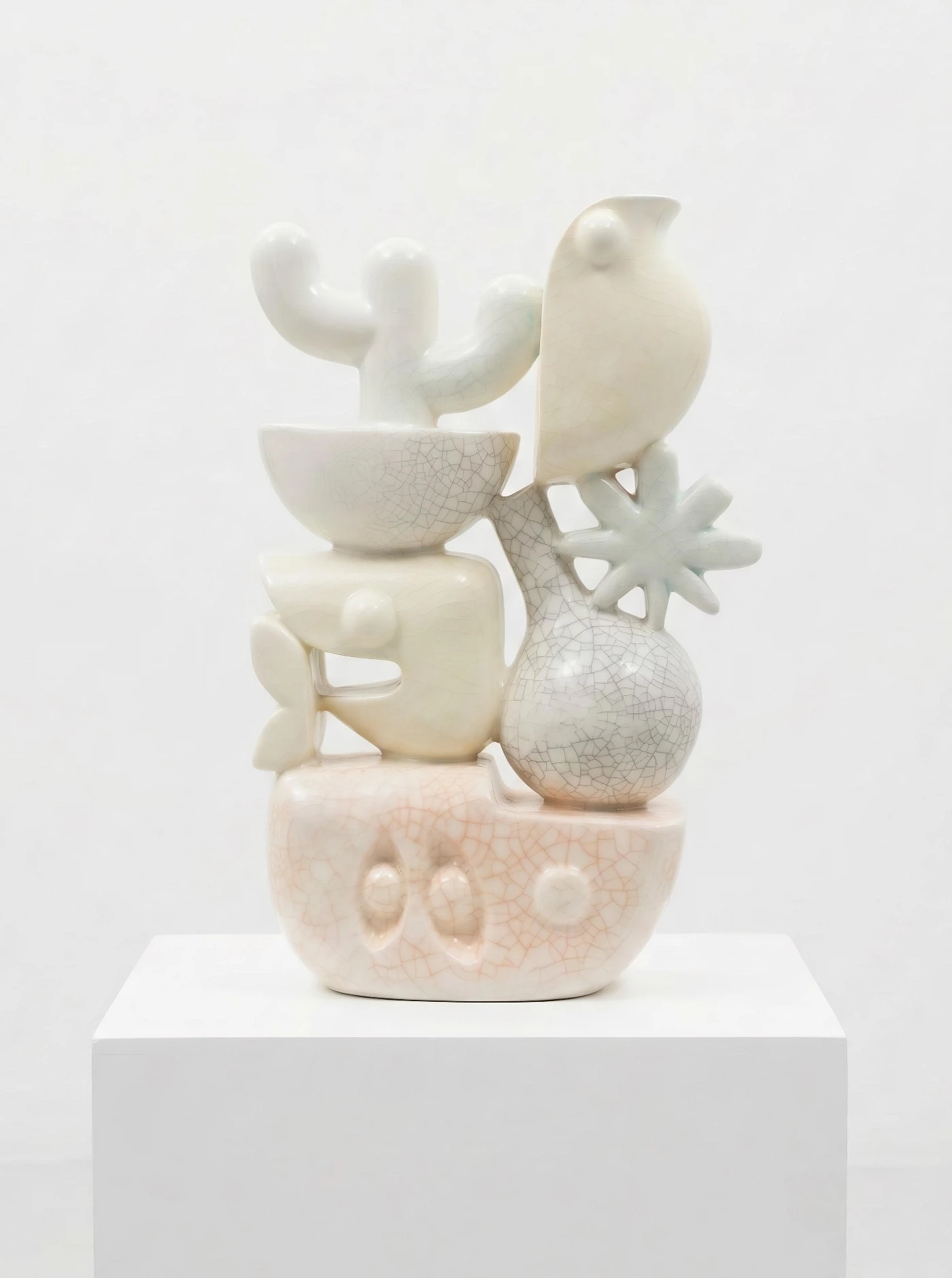
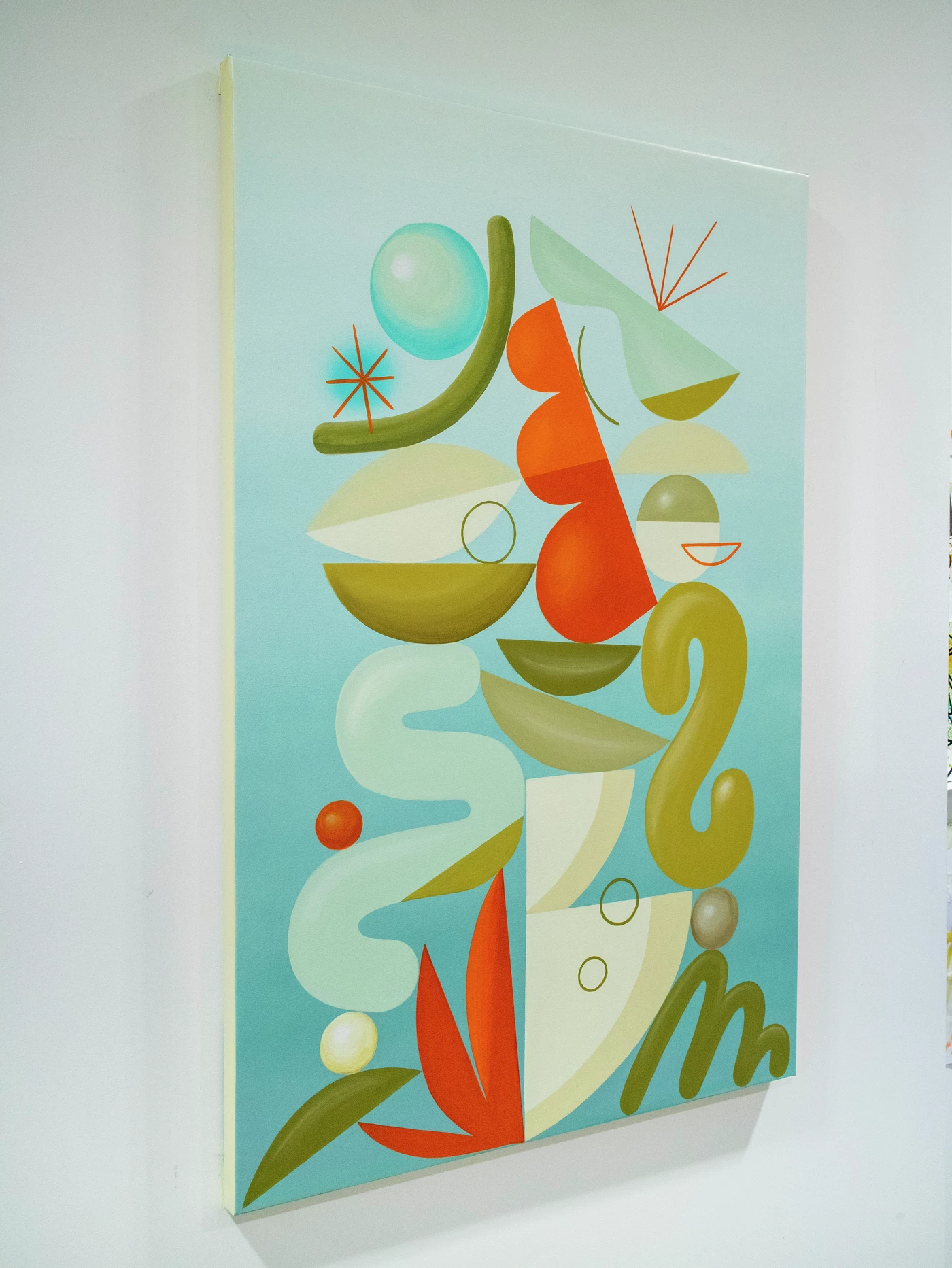
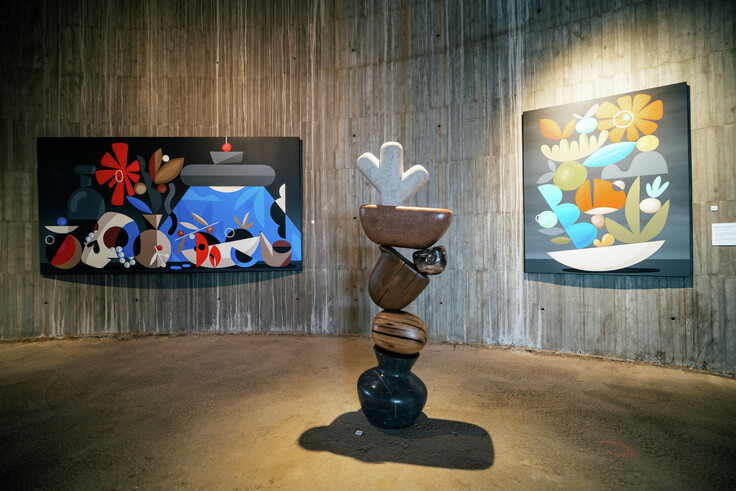
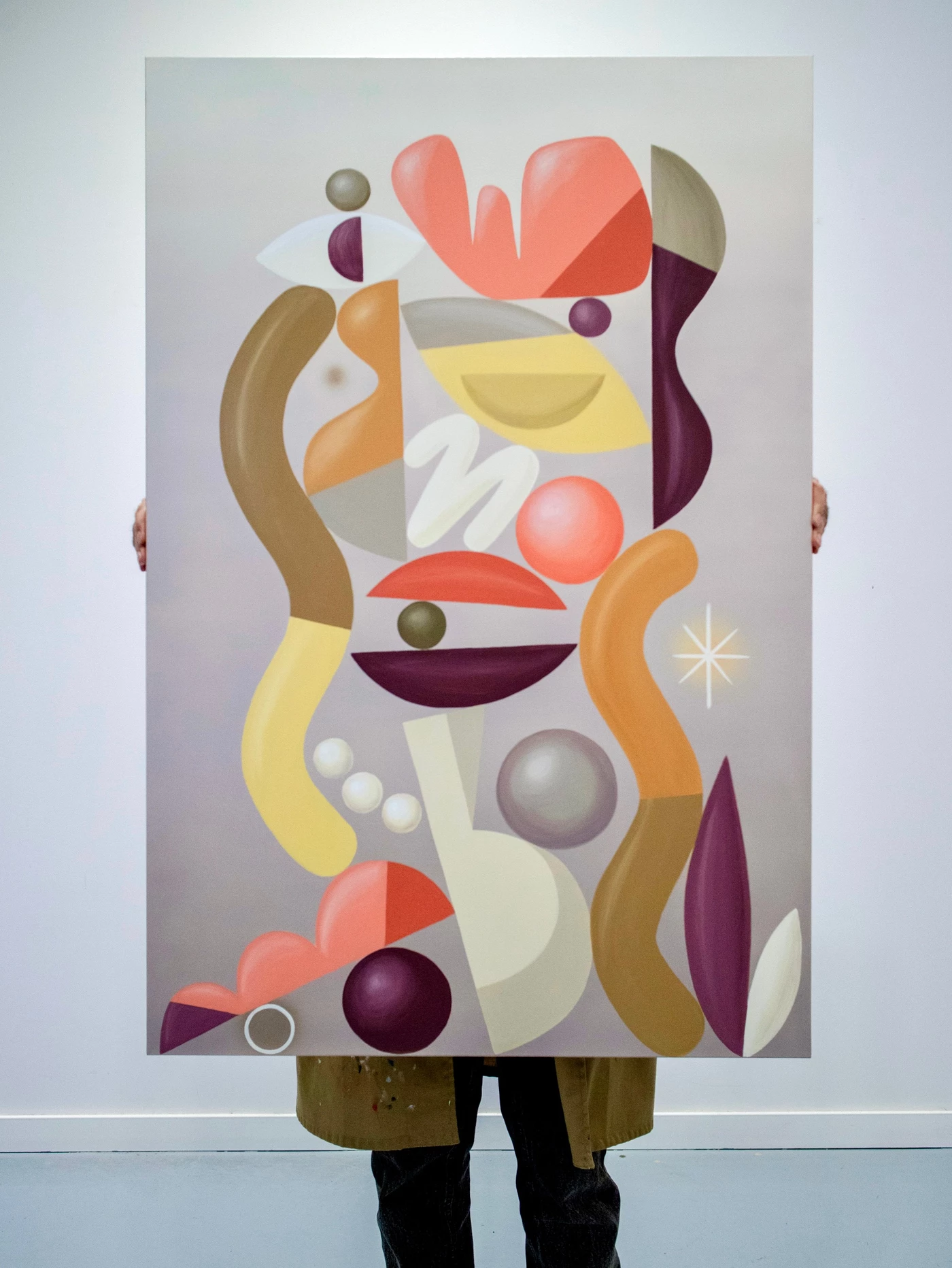
Rubén Sánchez's work is characterized by rigorous formal construction, where compositional balance is not simply an aesthetic pursuit but a conceptual structure that articulates the entirety of his visual language. His self-taught approach has led to a refined plastic grammar, in which biomorphic forms, fragmented geometries, and high-saturation color palettes are integrated with mathematical precision into the pictorial space. Sánchez competently masters the tension between symmetry and asymmetry, generating a visual rhythm that guides the viewer through implicit narratives, often supported by Mediterranean symbolic or mythological references. His technical quality lies in the ability to resolve complex works with an economy of visual elements that, far from diluting expressiveness, enhance the formal legibility and communicative strength of his pieces. This compositional solidity extends to mural formats as well as works on canvas or ceramic, configuring a coherent body of work with a consolidated stylistic identity and growing international projection.
Financial information
Identidades sintéticas
Synthetic Identities is a series in which Rubén Sánchez continues to explore portraiture through his most recognizable language: simple forms, intense colors, and very direct compositions. Here, the figures do not seek to represent anyone specific, but to convey an attitude, an energy, or a state. By reducing features to a minimum, each character becomes more universal and relatable. There is something playful in the form, but also a clear intention to capture the essential. Overall, the series presents a contemporary view on identity, understood as something changeable, constructed, and open.
Weight of Now (El Peso del Presente)
Everyday life is deconstructed into a game of balanced forms, reflecting the fragile stability of our day-to-day existence, so brittle and easily crumbled. This delicate balance is deeply linked to our mental state and our way of facing challenges. Thus, the artist takes on the challenge of creating a composition that comforts us, even when the ensemble of elements remains in unstable equilibrium. In this series, the artist engages in an exercise of synthesis that borders on the abstract, without abandoning the figurative forms present in his previous works, which can be deciphered with greater or lesser ease depending on the viewer's familiarity with his work.
Quattro
Works with a common color palette with few variations between pieces. Centered compositions, very figurative, and a background divided into 4 colors. The importance is focused on an object or set of objects that breathe against the background, leaving aside the horror vacui of compositions like "Equilibrios Cotidianos" (Everyday Balances) a bit.
Equilibrios Cotidianos
Works that show unbalanced compositions while creating a curious balance, symbolizing the external factors that destabilize our daily lives and ultimately become part of our own equilibrium. Works that ask the viewer how they face these types of situations and what elements balance or unbalance their lives. Still lifes that pay tribute to the magic of the day-to-day.
Black and White
Exercises in synthesis where I like to challenge myself and achieve attractive compositions with the absolute absence of color. This generates a more direct message and a very primal visual impact, connecting us with tribal or even primitive art. Matisse did something similar with his cutouts once he was limited with painting, and they are the works for which we remember him most.
Momentum
Works that start from a raw canvas without a sketch. Pure freestyle in which imperfect strokes, color mixing, and technique combinations are highlighted. Dynamism and jazz. Thick brush and a color palette where I jump from color to color without cleaning the brush. Pure momentum.
El laboratorio de la idea
The Laboratory of the Idea Before reaching the canvas, the work is born on paper. Here I test compositions, colors, and forms with complete freedom. It is a space for experimentation where chance and intuition reveal unexpected paths. Paper allows me to err, correct, and discover. Sometimes, an accidental stain becomes the trigger for an entire series. Other times, the tests remain as records of an evolving process. This stage is essential: a laboratory where the idea breathes before taking definitive form on the canvas.