

Daniel Domingo Schweitzer
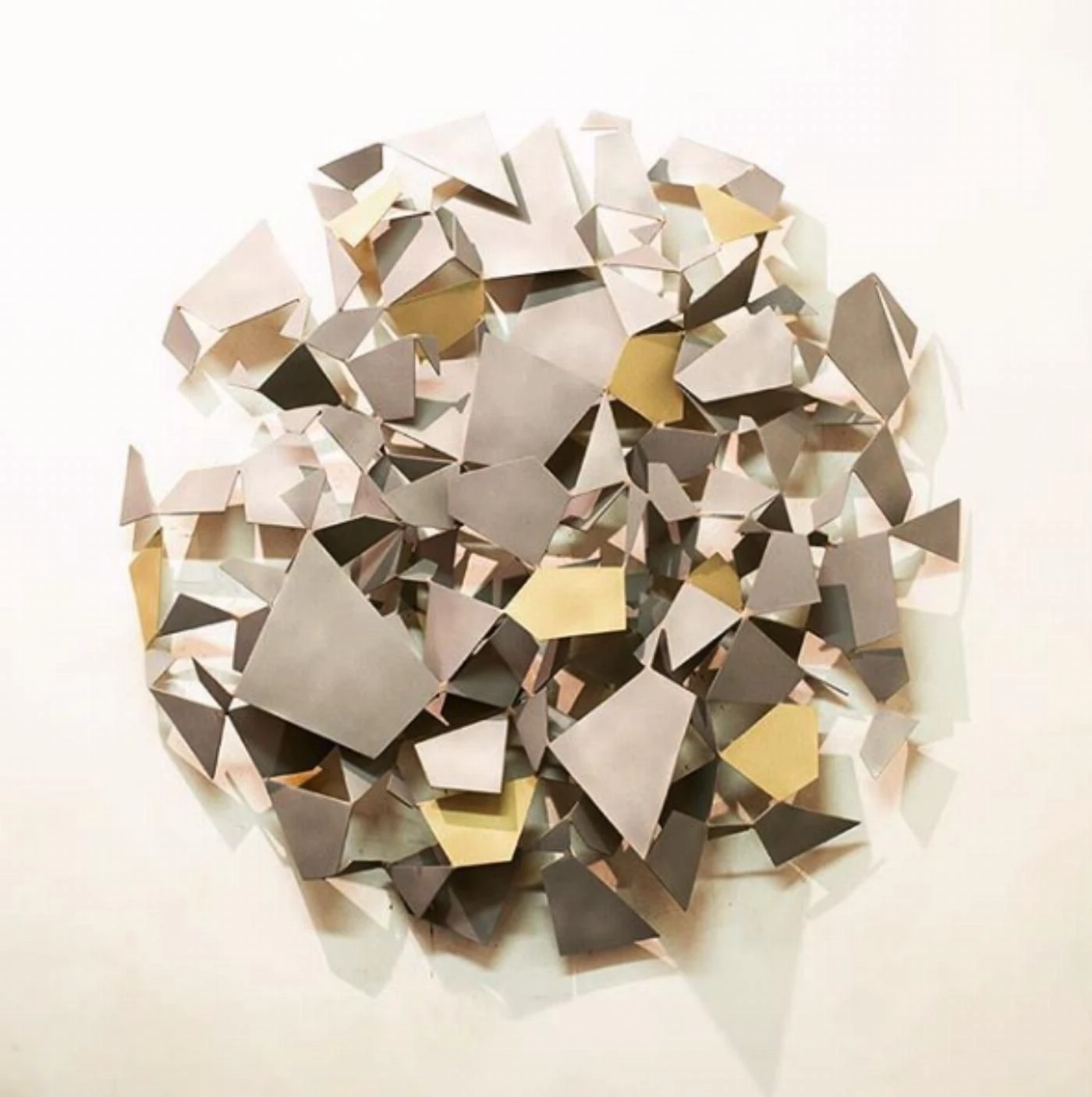
Daniel Domingo Schweitzer develops sculptural compositions and two-dimensional works. The relationship he establishes with space and the viewer is mediated by the importance of material and geometric forms. At Saisho, he presents two projects, "Organisms and Fractals" and "Torsions of Space," which question "How do we create space?" through the investigation of concepts such as the body, material, space, and form. He has presented his work at the Contemporary Art Space (EAC) in Alicante and participated in renowned fairs like Hybrid in Madrid. His work is held in collections such as the Fundación ACB and the Antonio Gala Foundation (Córdoba). He is also a member of La Colmena (Madrid 2015), a cultural platform with which he has held several exhibitions.
Financial information
The Shape of light
It is a project that uses geometry, light, and the viewer's movement as a means to reflect on the mechanisms involved in the construction of lived space. I want to invite the viewer to reflect on the construction of their own sensory space, placing experience at the center and in the foreground. The series is inspired by origami structures applied to an aluminum plate. The finish is made with holographic paint, which decomposes light into its visible spectrum. This causes the viewer to perceive geometry and light differently, depending on their point of view and movement.
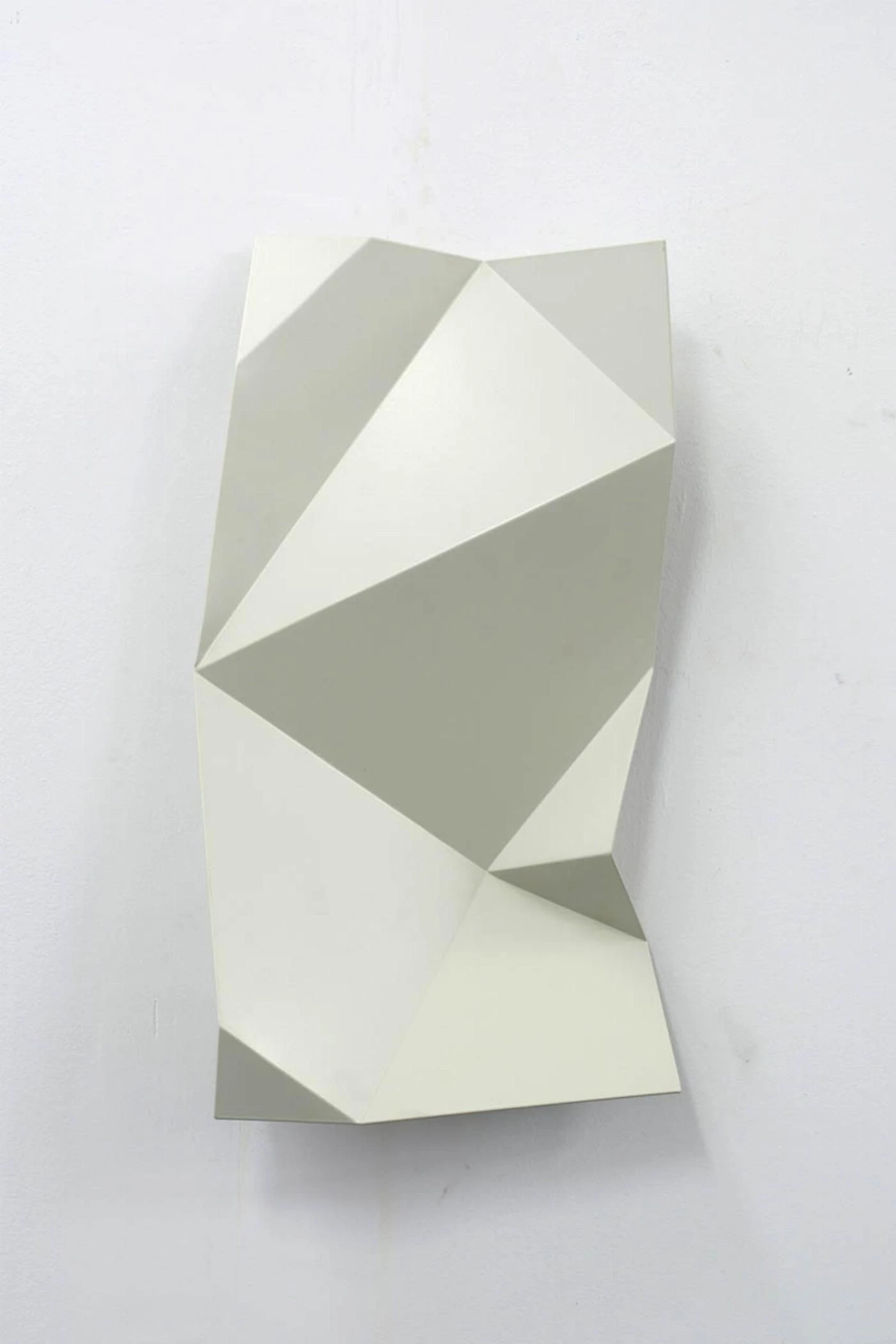
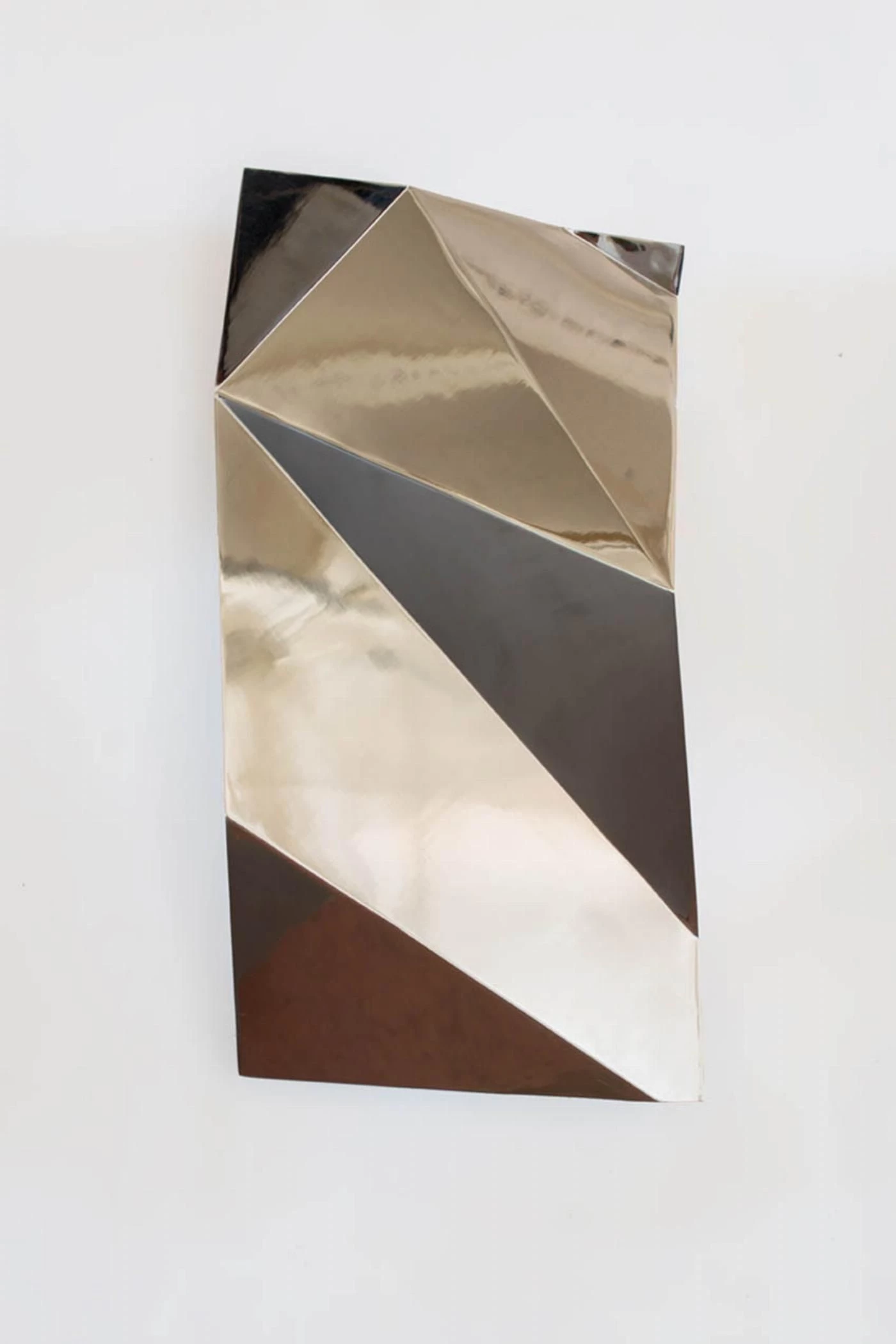
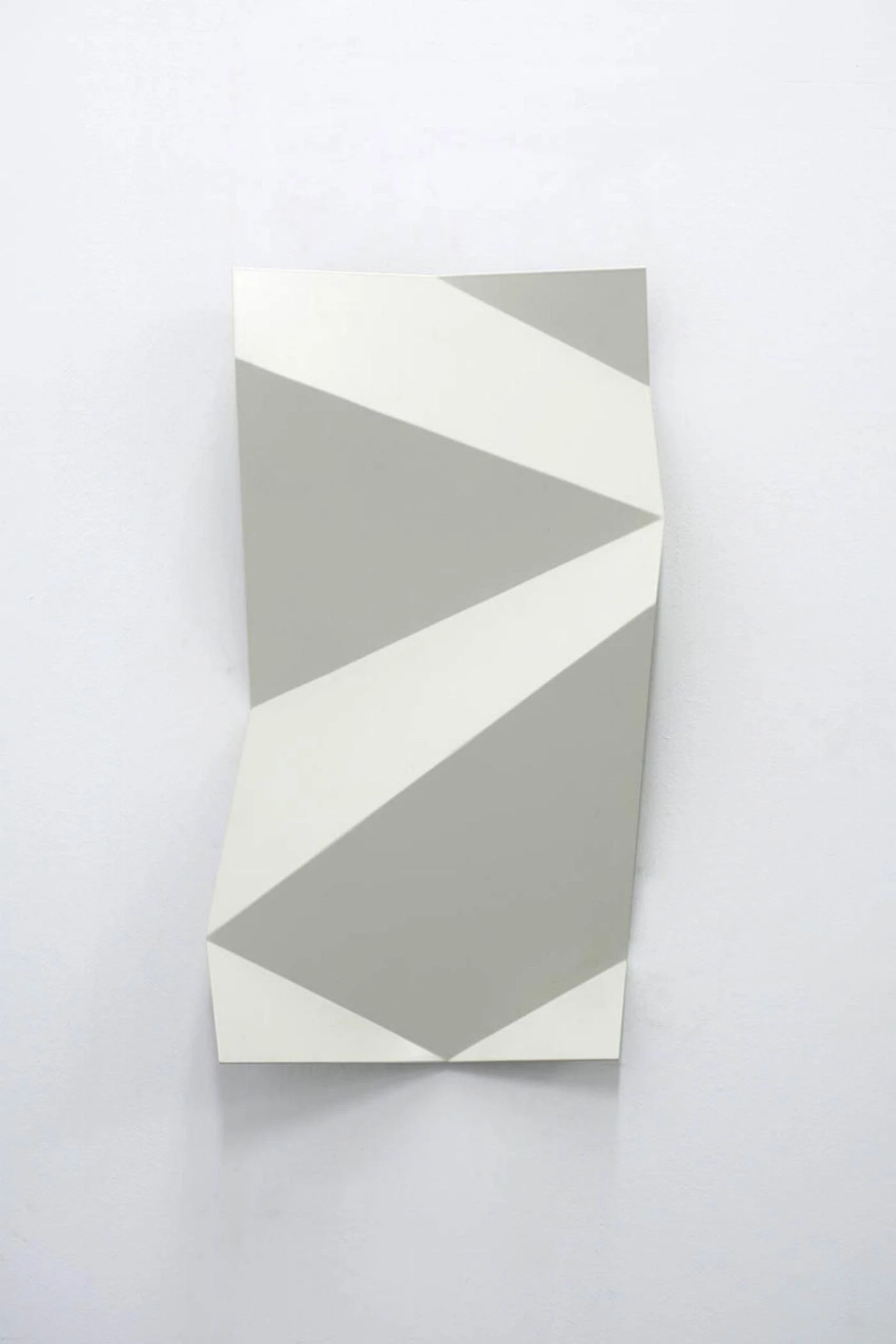
Twists of Space
In Twists of Space, Daniel Domingo investigates the perceptual limits of the sculptural object, stripping it of all narrative or symbolic baggage to place it in the realm of the essential. In this series, form and matter are not vehicles for meaning, but autonomous entities that express themselves through their pure presence. The proposal stems from a critical observation of the trend towards simplification in contemporary plastic languages, where the verbal and conceptual give way to the sensory. Domingo embraces this direction not as a loss, but as a possibility: the possibility of returning to the viewer a direct, unmediated experience, in which the object — reduced to its minimal conditions of existence — can reveal all its evocative power.
Primary Structure
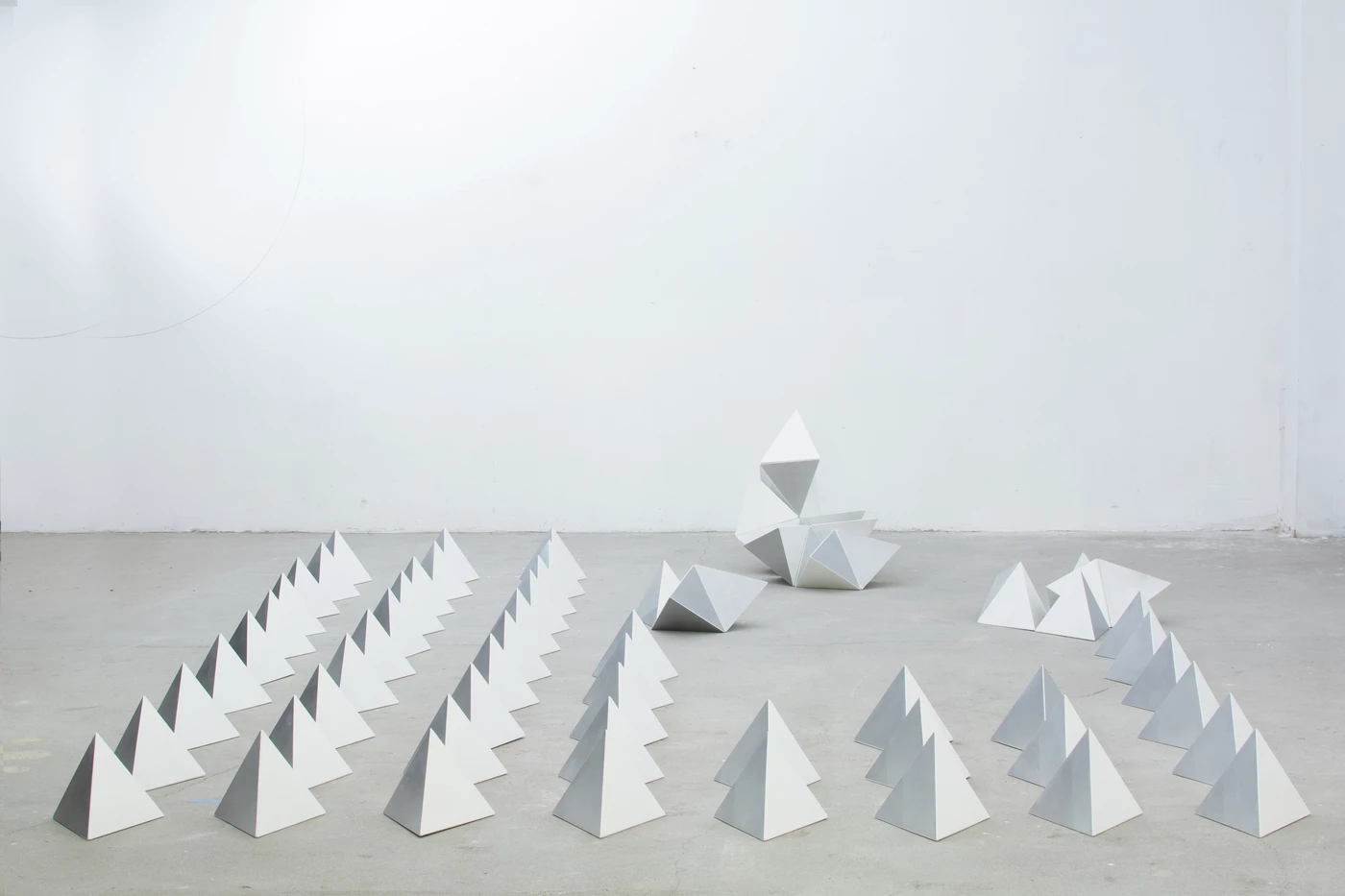
With an explicit nod to the minimalist art of the 1960s, Primary Structures is built from repetition and elementary geometry to give rise to objects that elude symbolic representation. Inspired by a formalist logic, the pieces in this series "are what they are": structures that affirm themselves through their own materiality, form, color, and visual weight. Far from functioning as signs, these sculptures present themselves as physical bodies that, despite their apparently neutral character, alter space, challenge the viewer, and dialogue with architecture. Their possible dysfunctionality — as failed columns or displaced fragments — reinforces their ambiguous quality: they do not represent, but they affect.
Strata
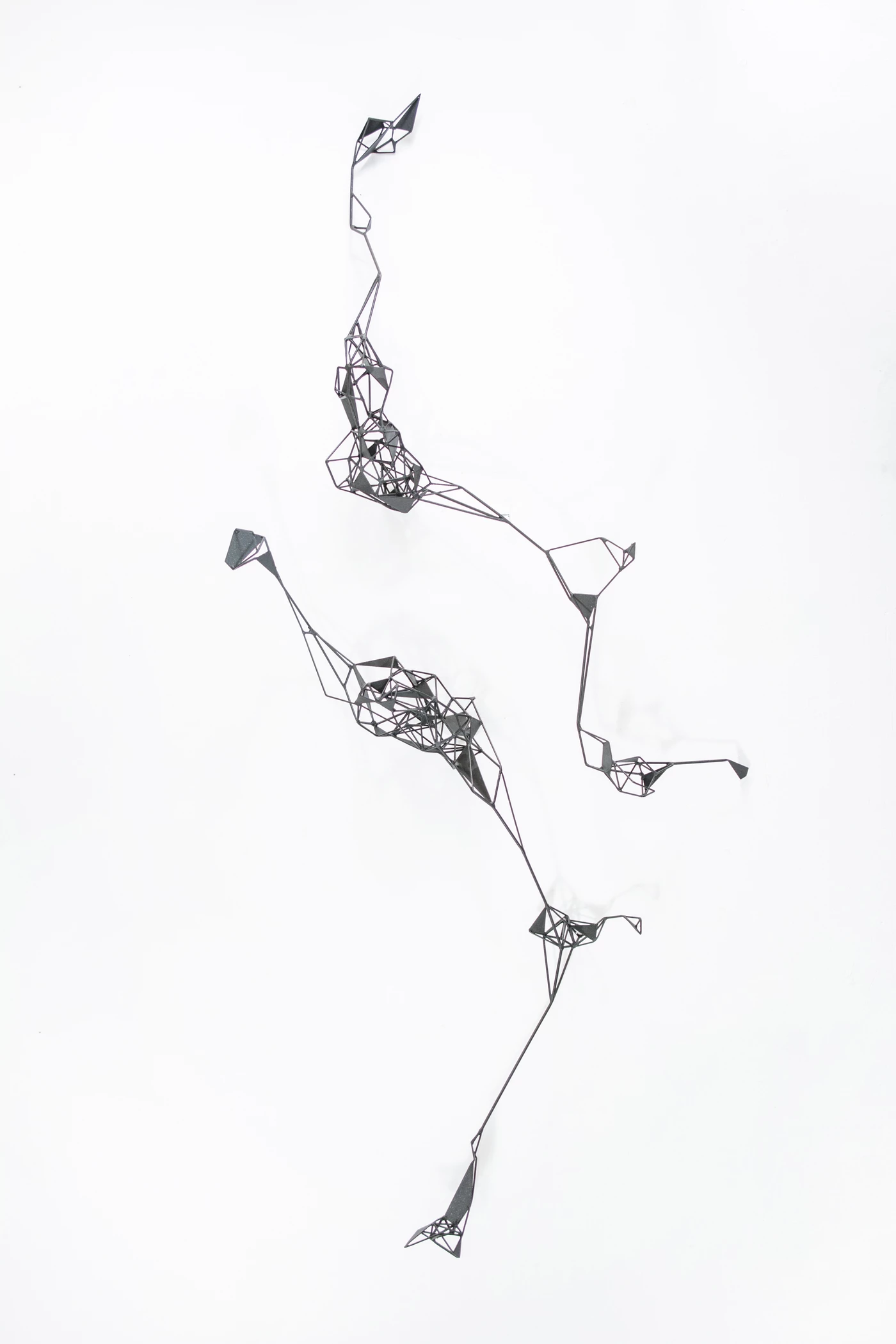
In Strata, Daniel Domingo places the body as the starting point for an investigation into the construction of space. Through sculptures and installations, the series unfolds a journey through different plastic languages with the aim of posing an essential question: how do we create space? The pieces function as fragments or layers — strata — that emerge from the relationship between matter, body, and architecture. They do not represent a place, but rather evoke it: they construct it in the encounter between the artwork and the viewer. In this sense, each form not only occupies a space but reconfigures it.
Solid Unfoldings
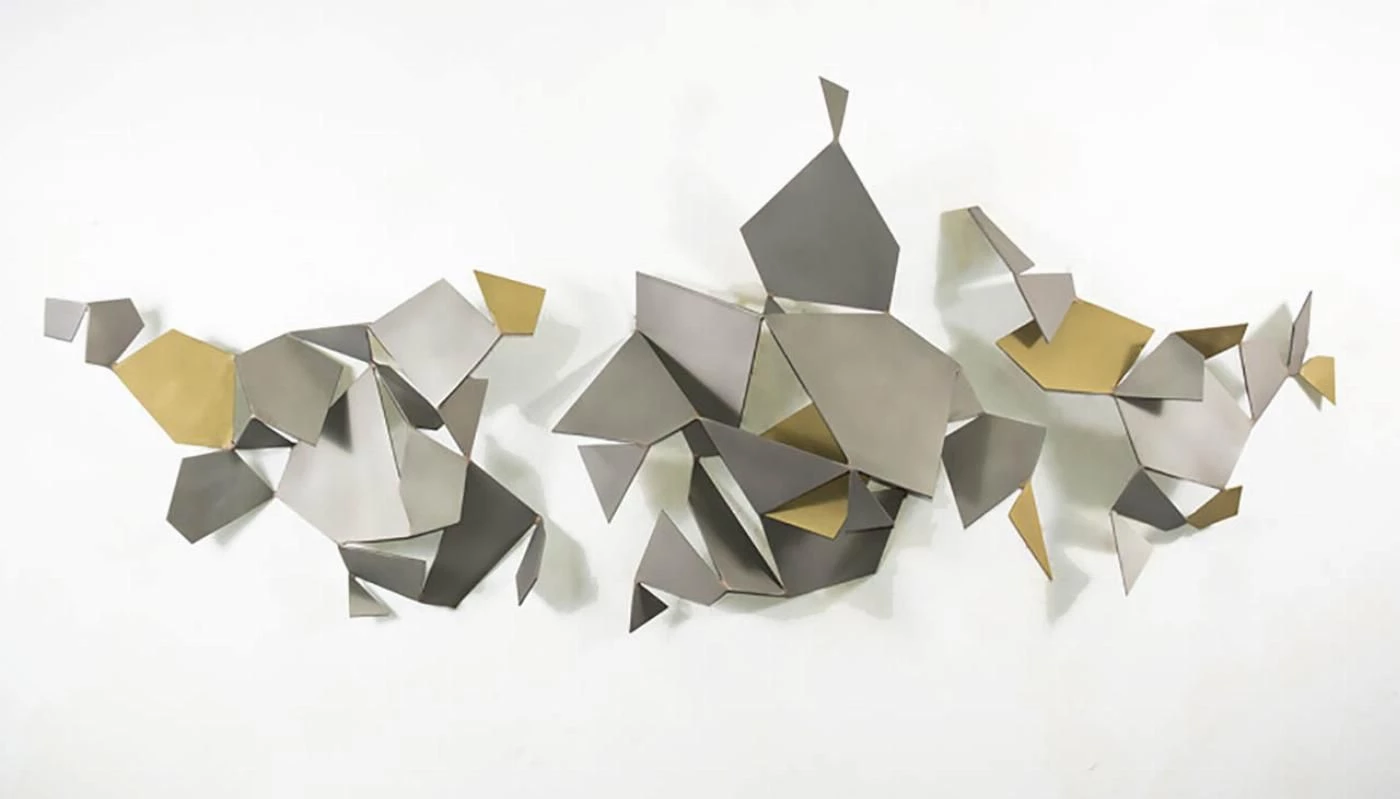
Solid Unfoldings brings together a collection of geometric sculptures in which Daniel Domingo works from the idea of “unfolding” volume: opening the solid and extending it into space so that its planes, edges, and internal relationships are exposed. The series materializes in pieces made of brass and stainless steel, as well as works in iron and brass, where geometric language functions as a structural system that transforms as its position, scale, and spatial tension change. In this corpus, the solid ceases to be a closed form and becomes an expanding three-dimensional map: a structure that opens and reorganizes itself, maintaining precise constructive logic but showing its fragility in the face of the unfolding gesture. Geometry thus appears as a language for thinking about space through the articulation of modules, voids, and rhythms, inviting the viewer to mentally reconstruct the volume from its unfolded fragments.
Artistic career
Solo exhibitions
Collective exhibitions
Biennials and festivals
Fairs
Awards, grants and residencies
Collections
Analytical information
Market information
Signature value evolution
Professional artistic critique
Works by Daniel Domingo Schweitzer in the catalogue: Babel · Babel II · Deployment of Solids, III · Deployment of solids, IV · Fractals (section I) · Fractals (section III) · Geometric Dispersion I · Organism · Primary structure (Column III) · Primary structure (Column IV) · Space Torsion (Black Chrome) · Space Torsion (Bright Chrome I) · Space Torsion (Bright Chrome II) · Space Torsion (Chrome) · Space Torsion (Matte Chrome) · Space Torsion (White I) · Space Torsion (White II) · Space Torsion (White III) · Space Torsion (White IV) · Space Torsion (White V) · Torsion of space · Visible spectrum (object X) · Visible spectrum (object XIII) · Visible spectrum (object XIV) · Visible spectrum (object XV)