Alejandra de la Torre

Alejandra de la Torre

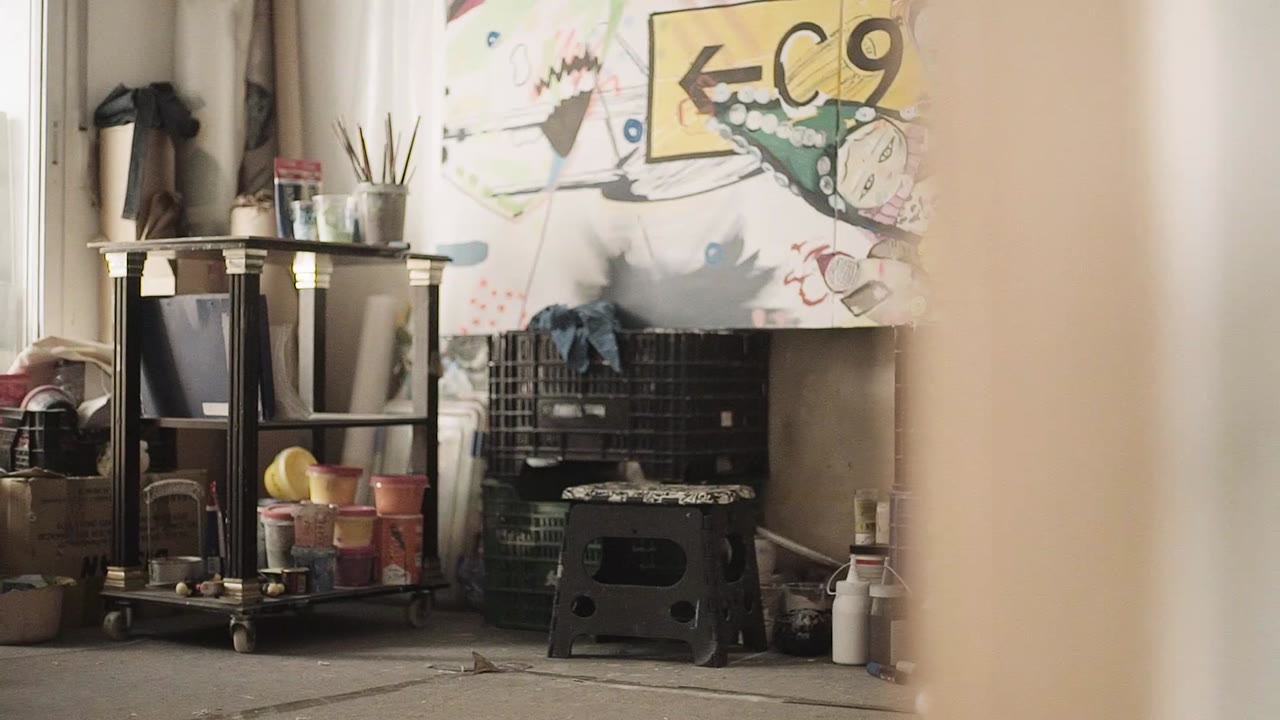
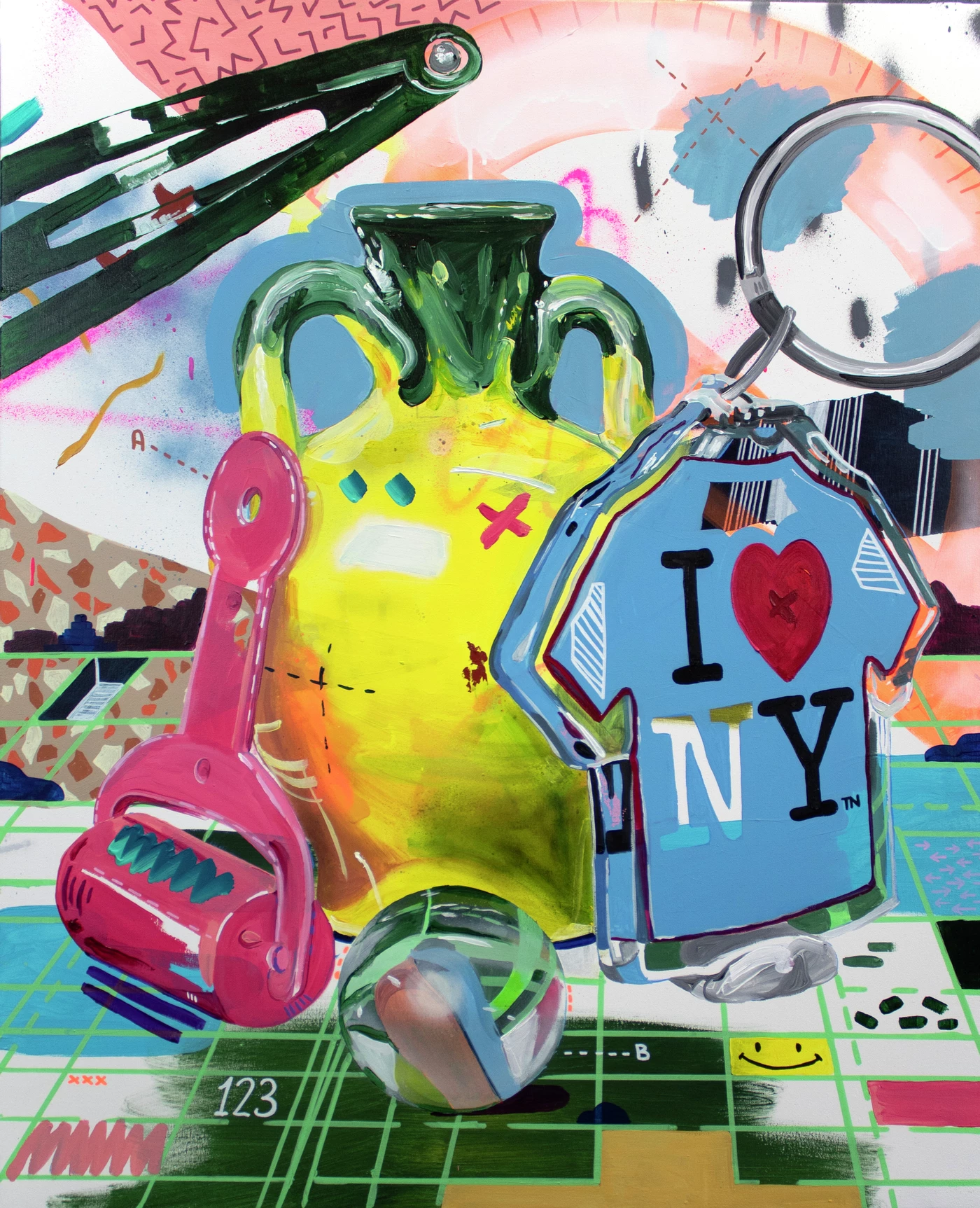
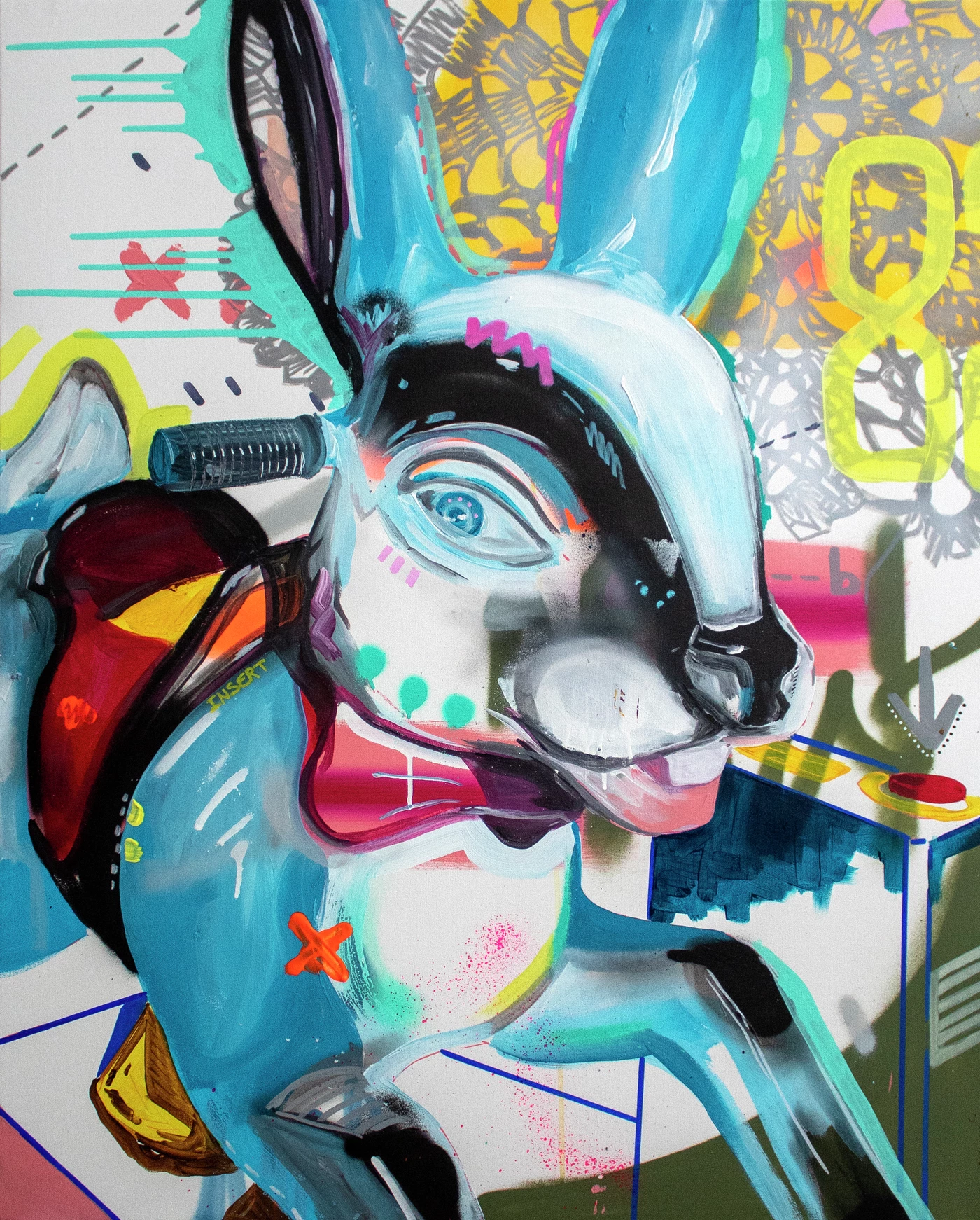
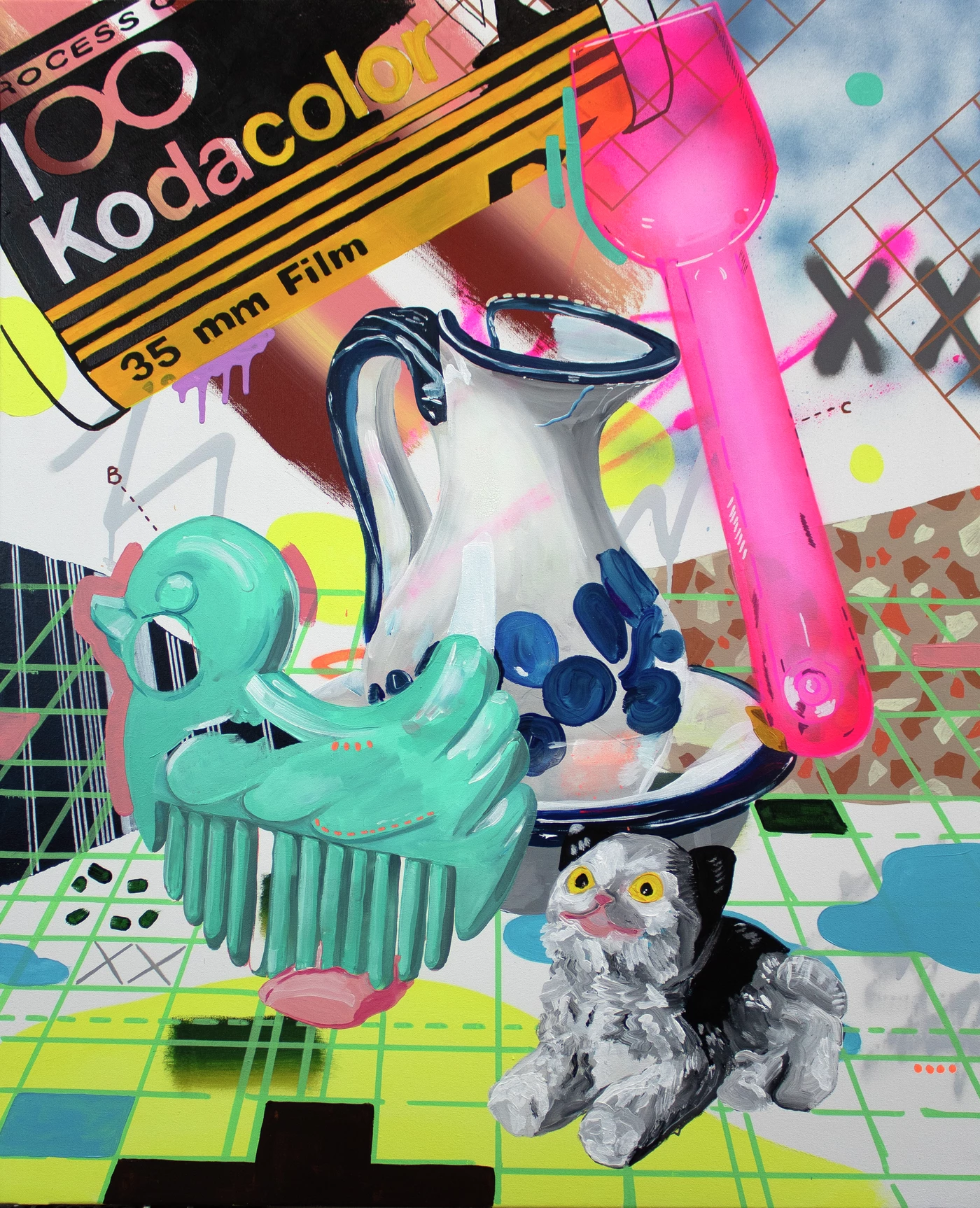
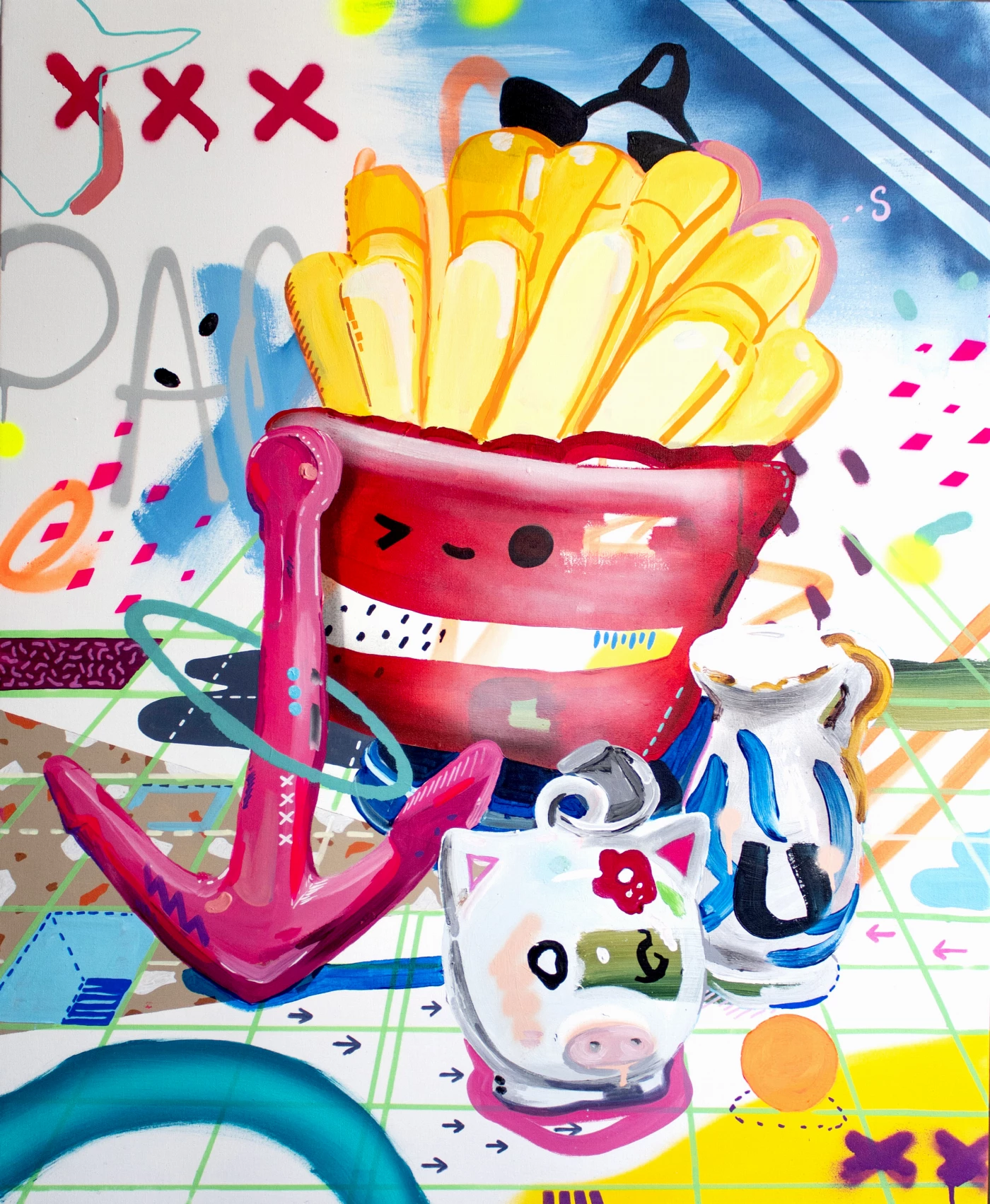
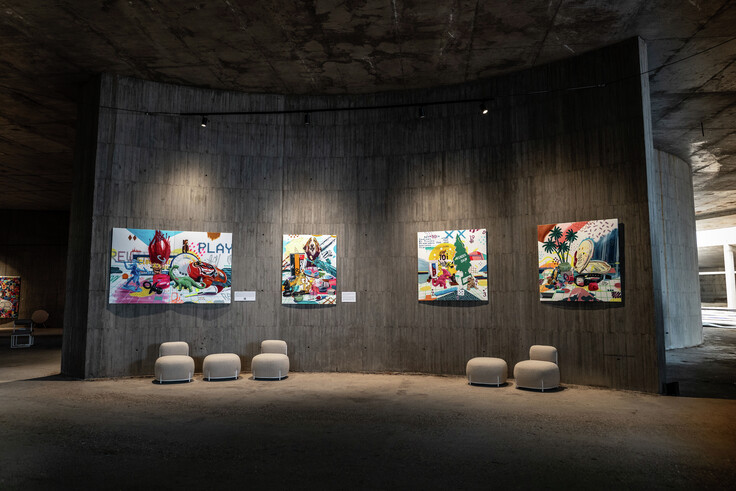
Artist Alejandra de la Torre investigates in her work the attachment people feel towards objects, why we need to accumulate possessions, and where the limits lie between what is considered normal and what can become an obsession. Starting from the particularity of objects, she makes a broader reflection on everyday acts related to different forms and motives of accumulation, from preserving memories to others like collecting. De la Torre combines painting with other techniques such as drawing, screen printing, transfer, and even the presence of physical objects.

Financial information

Signature value

32.26 ¢/cm2

Accum. revaluation

148.73 %

Price evolution

Bye bye Souvenir

Bye bye souvenir began to take shape in December 2020, at that time we could not move beyond our own community. Borders had suddenly reappeared, movement is limited to your country and depending on the moment to your community or your city, limits are drawn more than ever. And the reappearance of borders also meant, on the one hand, being separated from family and friends for more than a year and also accumulating work hours, as I discovered that I unconsciously used travel to disconnect, as it was one of the few moments when I didn't feel guilty for not being productive. This piece makes more sense the more time passes, as it is a reminder of a specific moment, of a truly crazy and unexpected circumstance, which we have almost forgotten but which we must remember, not let it disappear, because as that famous quote says, "he who does not know his history is doomed to repeat it"

14 works in the series
imagen-picture
imagen-picture
Asian Time II | Alejandra de la Torre
81 X 81 CM

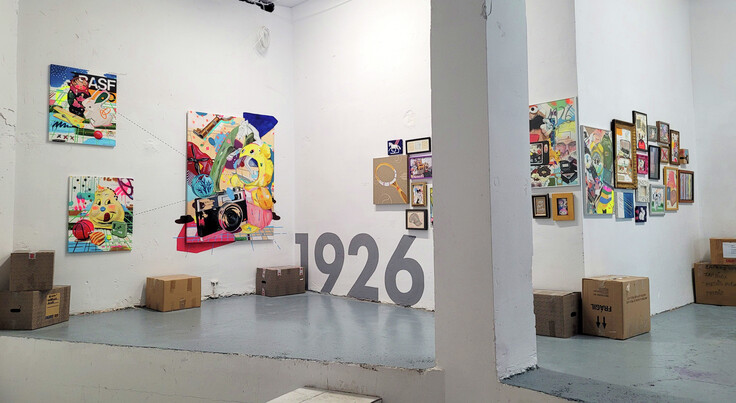
STORAGE ROOM #1926

Alejandra de la Torre's project arises from a personal experience of eviction and nomadic life, which transforms the storage unit —usually a secondary and transient space— into a central symbol of her work. This place, filled with personal objects, becomes an intimate archive of her identity and affective memory. Through painting, drawing, and narrative, the artist addresses contemporary displacement and the need for physical and emotional grounding. Her work poses a reflection on what it means to inhabit, store, and resist in a time when home has become unstable.

2 works in the series

Nasti de plasti

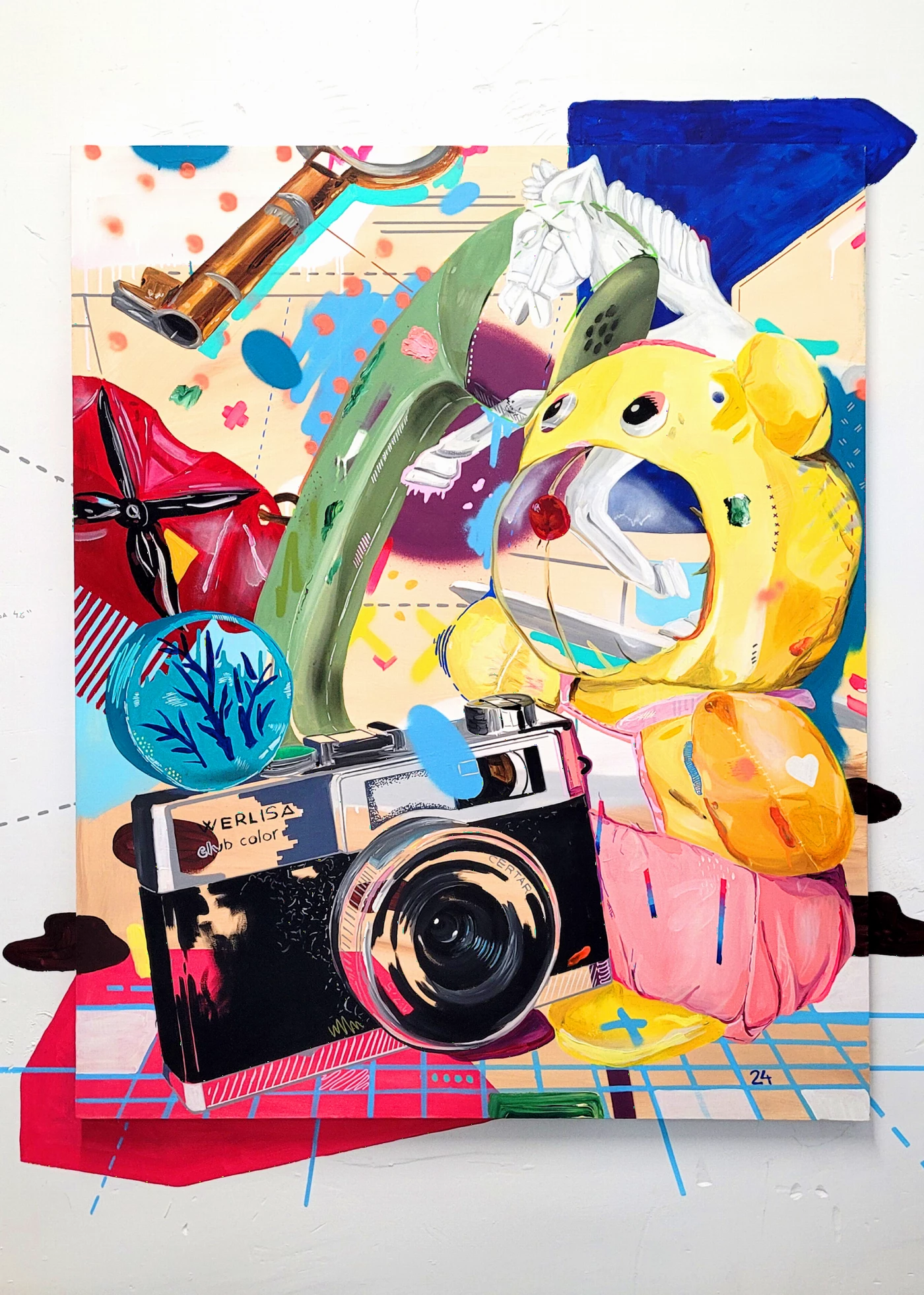
This fun and lighthearted series aims to highlight the cultural clash that occurred in the late 80s and late 90s, where everyday Spanish elements, such as a grandmother's table, Duralex glasses, or patterned tiles, coexisted with imported US trends of the time, like Nike Air, tracksuit tops, or fluorescent colors. Two opposing styles: tacky versus cool, kitsch versus modern, traditional versus imported, the news versus music videos... Alejandra highlights these objects from collective memory in her works, managing to transport the viewer. Just with that lightning trip to another time, to an experience, for a hundredth of a second, the work's function has fulfilled its objective. The artist explores the accumulation of objects as collections of memories, perhaps as a solution to the fear of forgetting, perhaps as a need to accumulate things that fill the gaps in memory.

16 works in the series

Inheritances

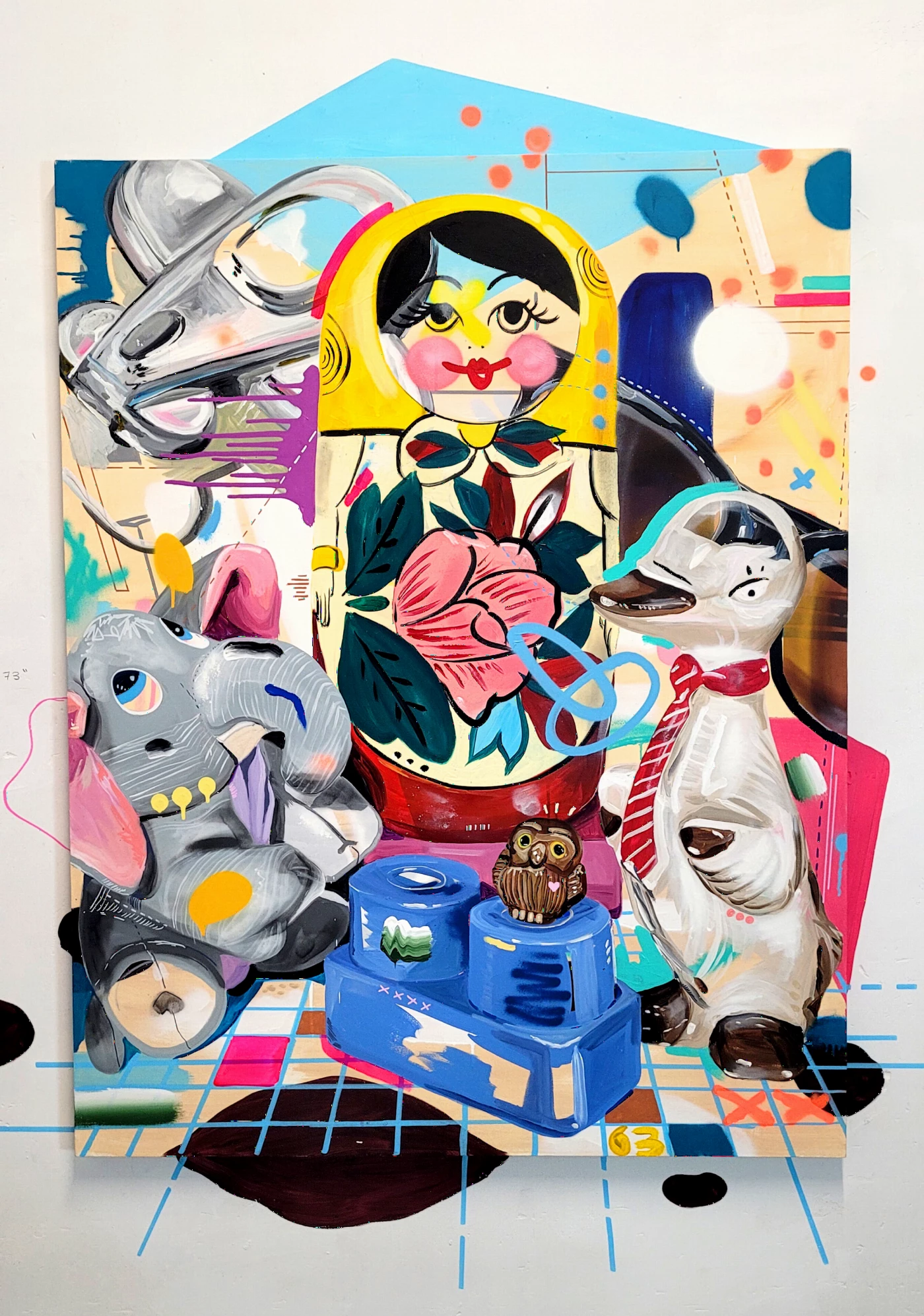
One is aware of how much they have changed when, when faced with the same object or situation, their reaction is different. One day, visiting my grandmother, I met those porcelain figures that every grandmother has on a shelf in her house again. These figures had always seemed ugly to me and I never understood why people were interested in them. But it was on this visit that my gaze changed, and suddenly I found myself appreciating them differently. For a moment I was able to be aware of what my gaze was like at that moment, but also of what it was like years before. In "inheritances" I represent these figurines known to everyone through this new gaze, this other vision of things through maturity. In these pieces, a universe emerges through a subtle juxtaposition of languages at the service of an iconography in which the recreated and glued objects serve as fetishes to build and reconstruct meanings around the living and the lived

19 works in the series

A ticket for a ride

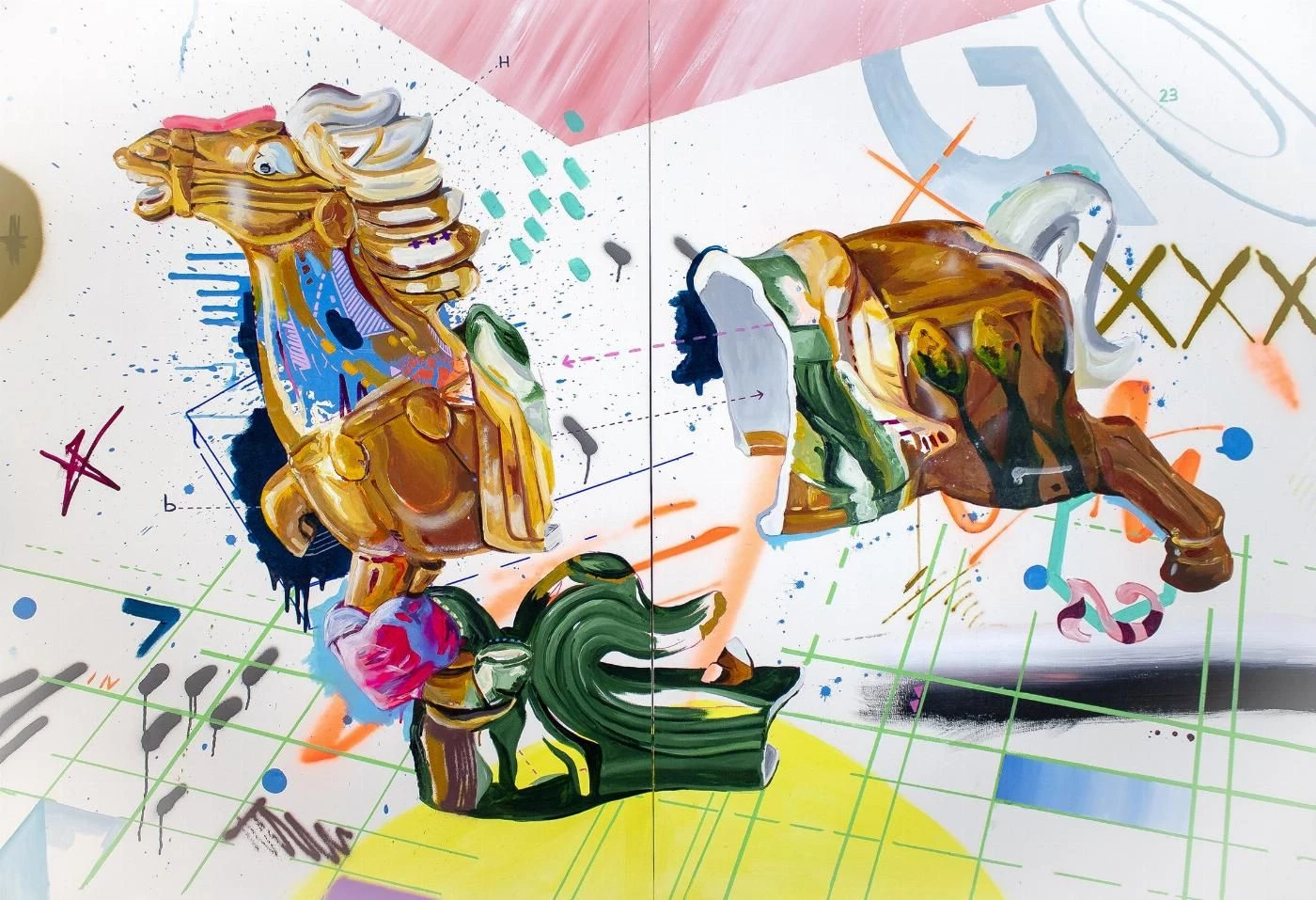
The fair is that space of light, color, and fun where, especially in childhood and adolescence, we enjoy ourselves a lot, but as we grow older it shows us another side. The traditional, dirty, and miserable part, which is what really defines these spaces and differentiates them from amusement parks. This decay is what makes these spaces so interesting and unique. Like the image of the drunken clown from the typical circus that travels through the different cities of Spain. Attracted by the personality and aesthetics of these colorful but also decadent and miserable spaces, even shabby (why not?) in many cases trapped in time, the series "A ticket for a ride" was born.

6 works in the series

The Olympics

"THE OLYMPICS" is a project focused on giving visibility that they never had, so many women in the world of sport. As in other fields throughout history, women's achievements were never valued as much as those of their male counterparts, ending up all of them forgotten. On the walls of our room, in adolescence and in many cases also in adulthood, we have our idols represented through posters. It was our way of creating a visual image of our aspirations and our goals. Focusing on athletes, I rarely saw a poster of women, therefore our role models were always based on male figures, which we had accepted, since few of us ever missed it, even being women. Therefore, I appropriated this type of object as a resource, in this way, I intend to reach the viewer through the object and the representation that appears in it.

11 works in the series