"Unbeatable service and outstanding advice. We bought well and we could not be more satisfied. We will do it again."Francisco Parras
Checking availability
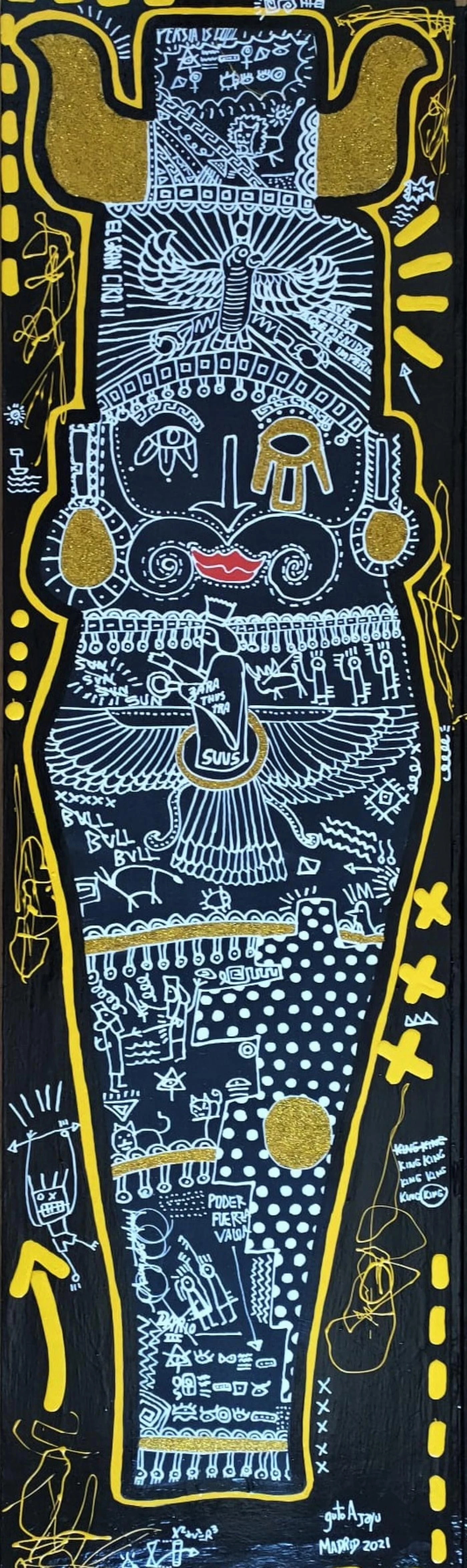
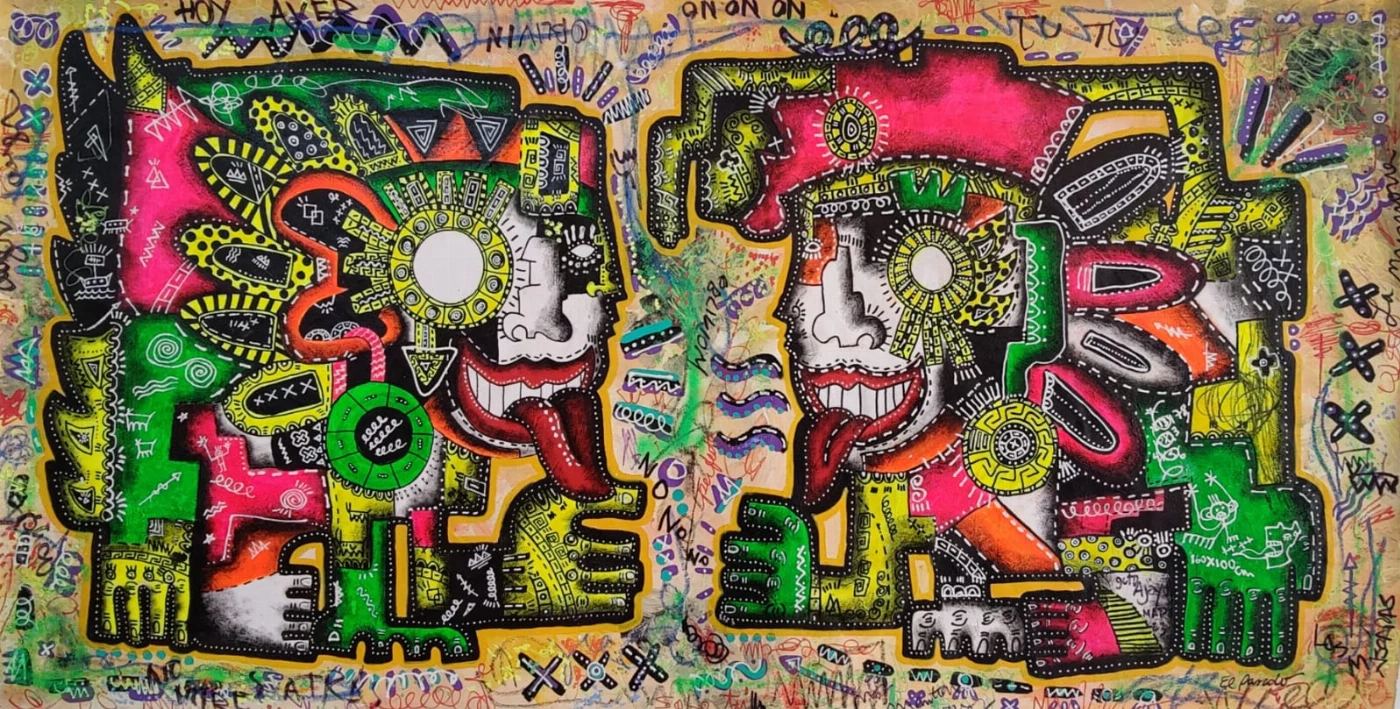
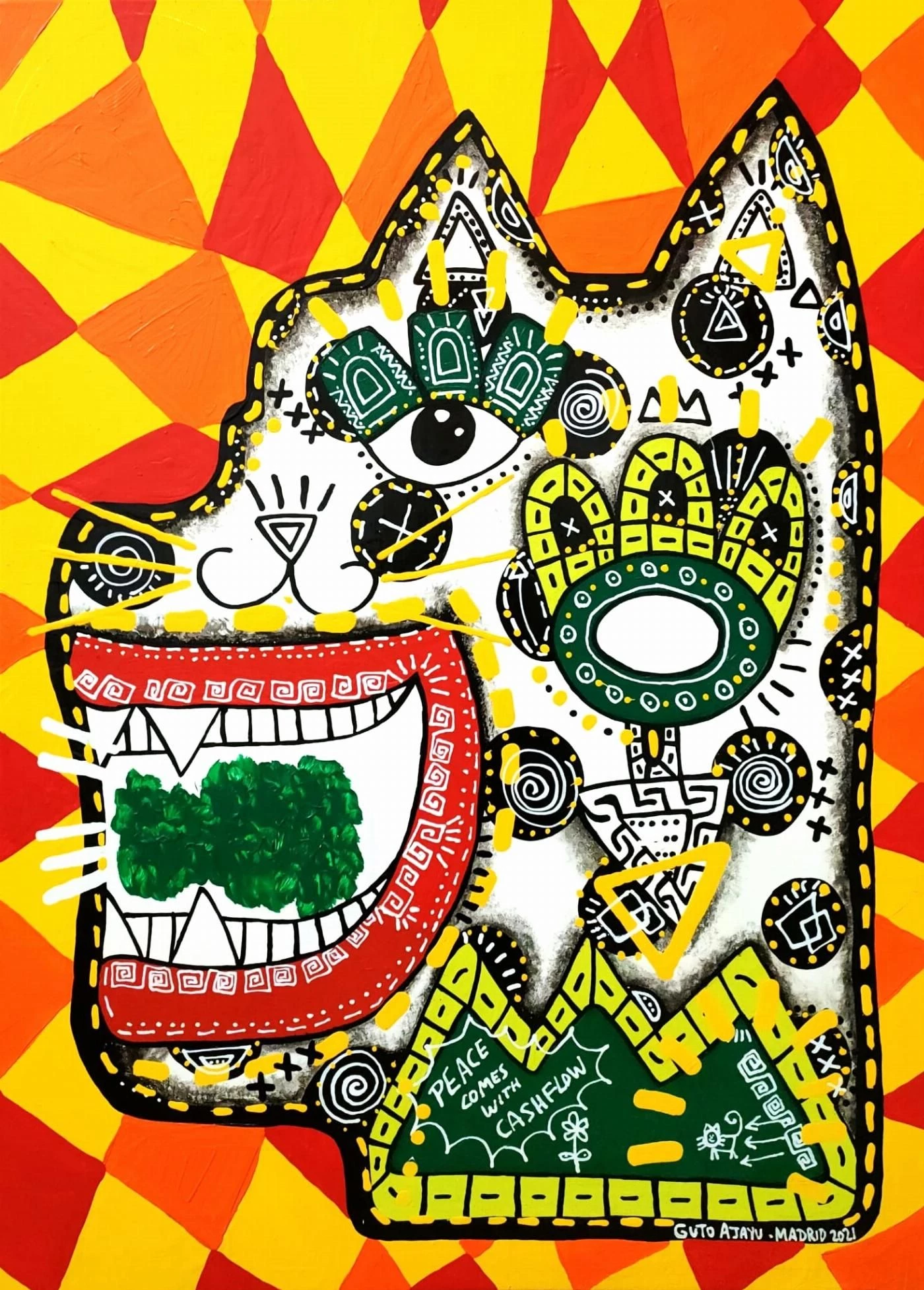
The perpetuity of affection
Guto AjayuQuoted market with traceable prices
Artist selection validated by expert criteria
Value evolution based on real demand
Personalized guidance from Saisho Advisors
Price evolution
Illustrative example. The real price evolution of this artwork is available with the Duchamp plan or above.
HOW WE MEASURE IT AT SAISHO
At Saisho, every artist starts from an initial signature value, determined through the analysis of their artistic fundamentals.
Only 1 in every 500 artists we analyze meets the quality criteria required to enter Saisho.
From that point, value changes according to real market demand, making it possible to understand transparently how it evolves over time.
View full analysisArtwork details
- Measurements
- 90 x 60 cm
- Discipline
- Pintura
- Styles
- Pop Art
- Supports
- Techniques
- Acrílico | Rotulador | Esmalte | Aerosol
- Year
- 2021
- Rationale
- Guto's new works are the result of and seek a more philosophical and profound meaning in their concepts, compared to his earlier, more immediate, visceral, and immediate stages. "The perpetuity of affection" explores the dimensions of positive emotions: Are they measurable? Are they quantifiable? The only certainty is that emotions change, mutate, or intensify. But regardless of the era or geographic, social, or economic context, emotions are perpetual in our human history. Affections and hatreds move, build, deconstruct, and undo empires and civilizations. As a symbol of this perpetuity, we can see a puma, a divine and hierarchical animal, immutable through time.
Includes certificate of authenticity
Shipping and transport
Each artwork is prepared and shipped with specialized transport, custom packaging, and insurance through final delivery.
- Home delivery: You will receive the artwork at the address you provide.
- Delivery time: Estimated according to the origin, destination, and characteristics of the artwork.
- Shipping origin: Pieces are shipped from the artist's studio or from our facilities in Madrid, depending on the artwork.
- International coverage: We ship worldwide through specialized operators.
- End-to-end management: We handle transport, insurance, and shipping-related procedures, including import taxes and duties when applicable.
- Transport cost: Calculated according to the destination and characteristics of the artwork, and confirmed before completing the acquisition.
This artwork ships from Spain.
Prices and payment
The displayed price corresponds to the artwork's current value within the Saisho Market.
ARTWORK.NEW.PRICES_PAYMENT_TEXT2


Saisho guarantee
Artworks available at Saisho have been selected through an artistic and market analysis system that guarantees their quality.
If the artwork is not right for you, you can recover your deposit or apply it to another artwork.
We accompany you throughout the process so every acquisition is an informed decision.
At Saisho you do not only acquire an artwork, you acquire with criteria.
Reserve with 5% and complete the acquisition later
Artist
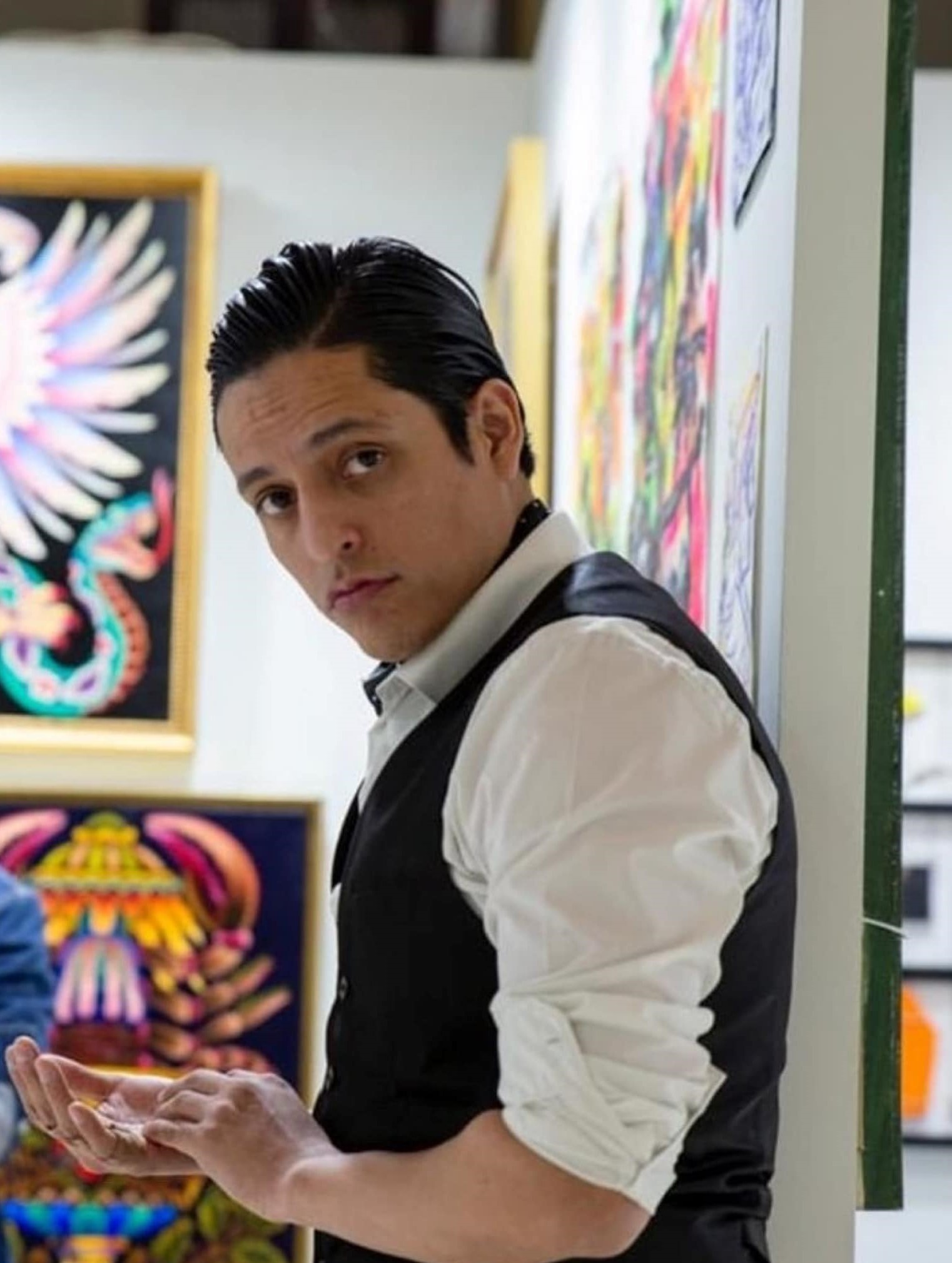
Guto Ajayu
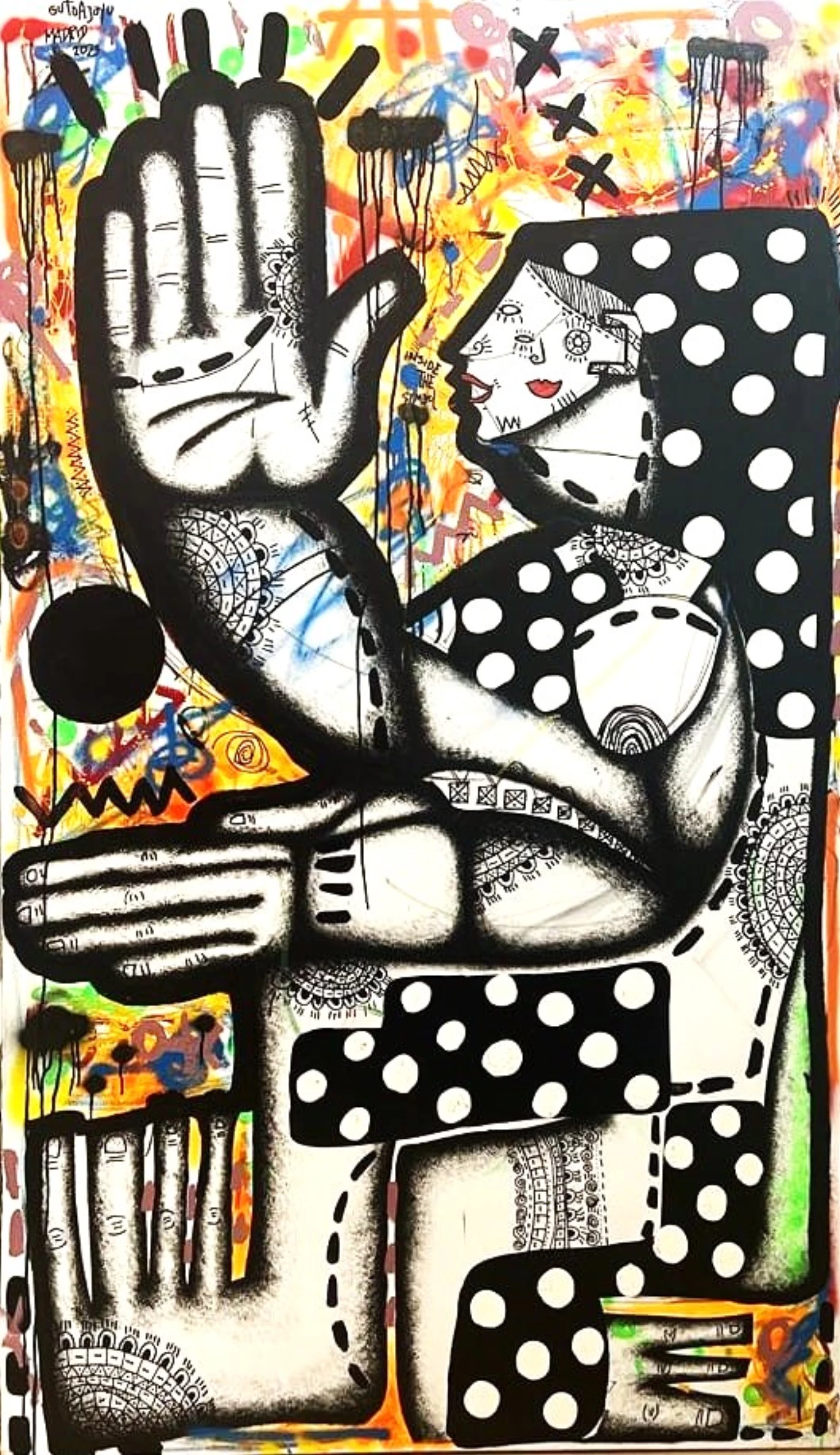
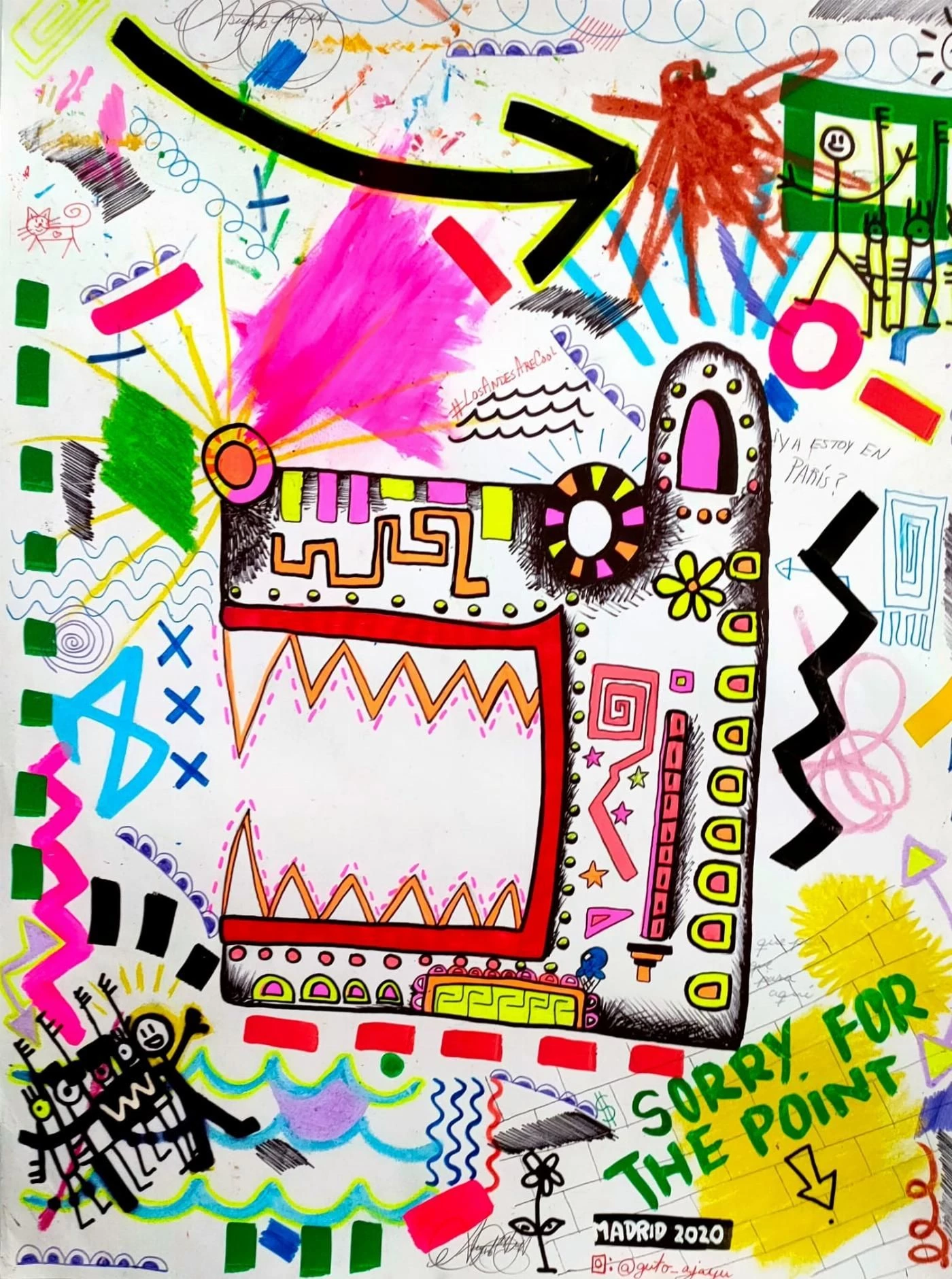
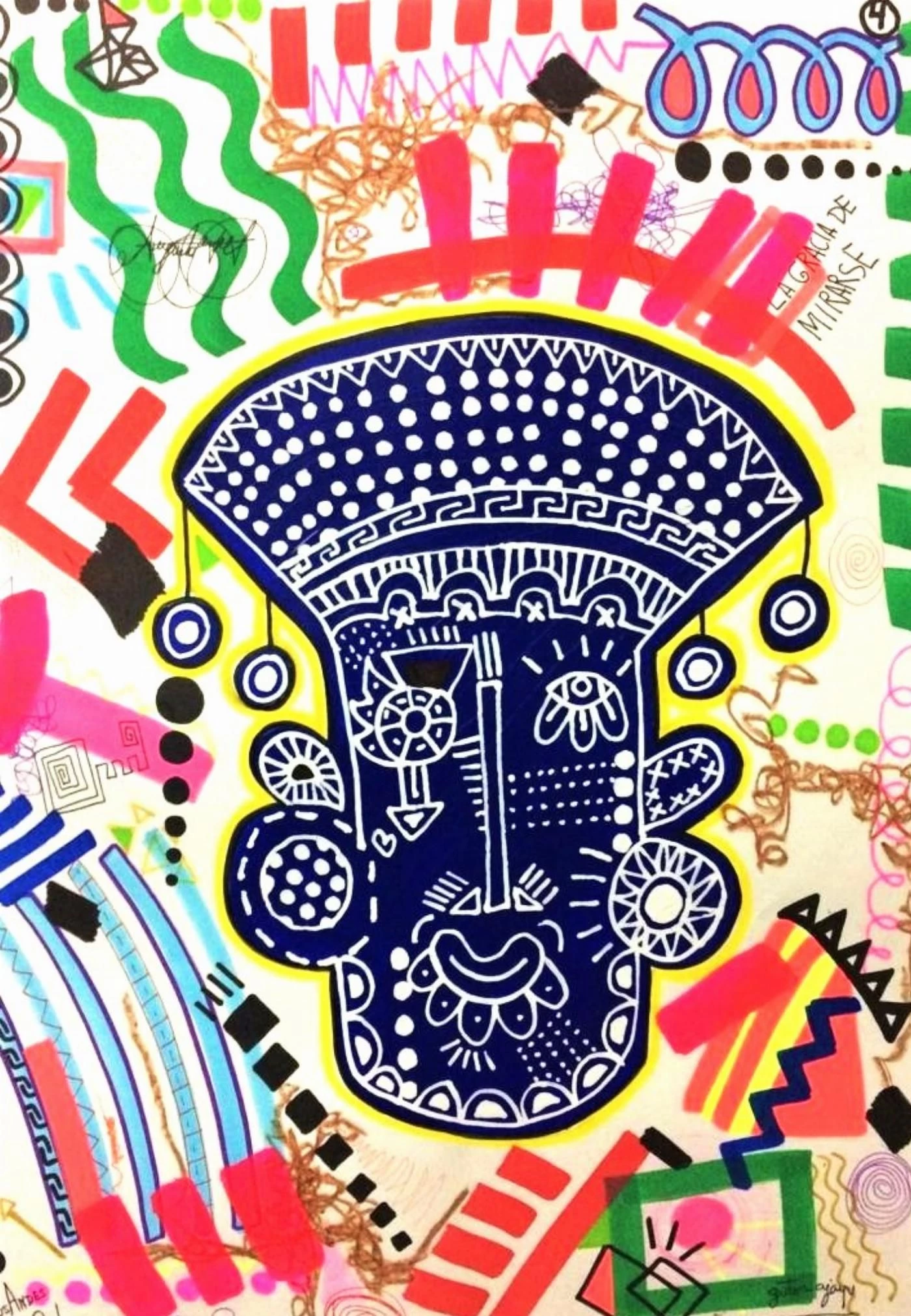
Guto Ajayu (Bolivia–Spain, 1990) is a visceral artist whose practice is articulated around a radical investigation into the animal identity that underlies human nature. His work explores raw qualities such as aggression, sexual impulse, violence, and delirium not as deviations, but as constitutive forces of the contemporary subject. From a deeply introspective perspective, his work functions as an exercise in self-analysis and confrontation with those primary instincts that persist in genetic and cultural memory, conditioning our ways of being and relating to each other. Trained in a turbulent social context and symbolically linked to totemic territories, he constructs an imaginary where the body is presented as a space of truth and knowledge. Strength and aggression appear in his practice not as gestures of domination, but as states of extreme lucidity and presence. He vindicates the figure of the dangerous and tempered individual, one who has traversed their own limits and recognizes in the wild a lucid and sacred condition. The totem acts as a symbolic axis connecting animality, myth, and ritual, giving rise to dystopian counter-narratives charged with irony, new symbolism, and a marked urban aesthetic. Physical action—tension, the blow, the effort—acquires a ceremonial character in his work, a direct and non-discursive liturgy where the body affirms its presence as a place of experience. Through these gestures, Ajayu proposes a radical way of being in the world, in which the wild becomes an aesthetic of instinct and a critical tool against the fragility of the contemporary subject. He has exhibited in institutions such as the Venice Biennale, the National Museum of Art of Bolivia, the Tambo Quirquincho Museum, the Museum of the Ducal Palace of Medinaceli, the Royal Academy of Art in London, and the Conde Duque Center, as well as in galleries and international fairs in cities such as Paris, London, Hong Kong, Madrid, Mexico City, Amsterdam, Rome, Monaco, and La Paz. His work is part of public and institutional collections of the Plurinational State of Bolivia and numerous private collections in Europe, America, Asia, and Oceania.
View full profileOther works by the artist
Guto Ajayu
Have questions?
We advise you in 2 minutes.