Iñaki Domingo
From an abstract approach, Iñaki Domingo's work reflects on the mechanisms of visual perception and focuses on the relationship between sight and the representation of reality. He is a member of the Altura Projects studio, where he develops his artistic projects. He also collaborates independently with public and private institutions for which he develops curatorial, editorial, and teaching projects.
Financial information
Mirrorworks
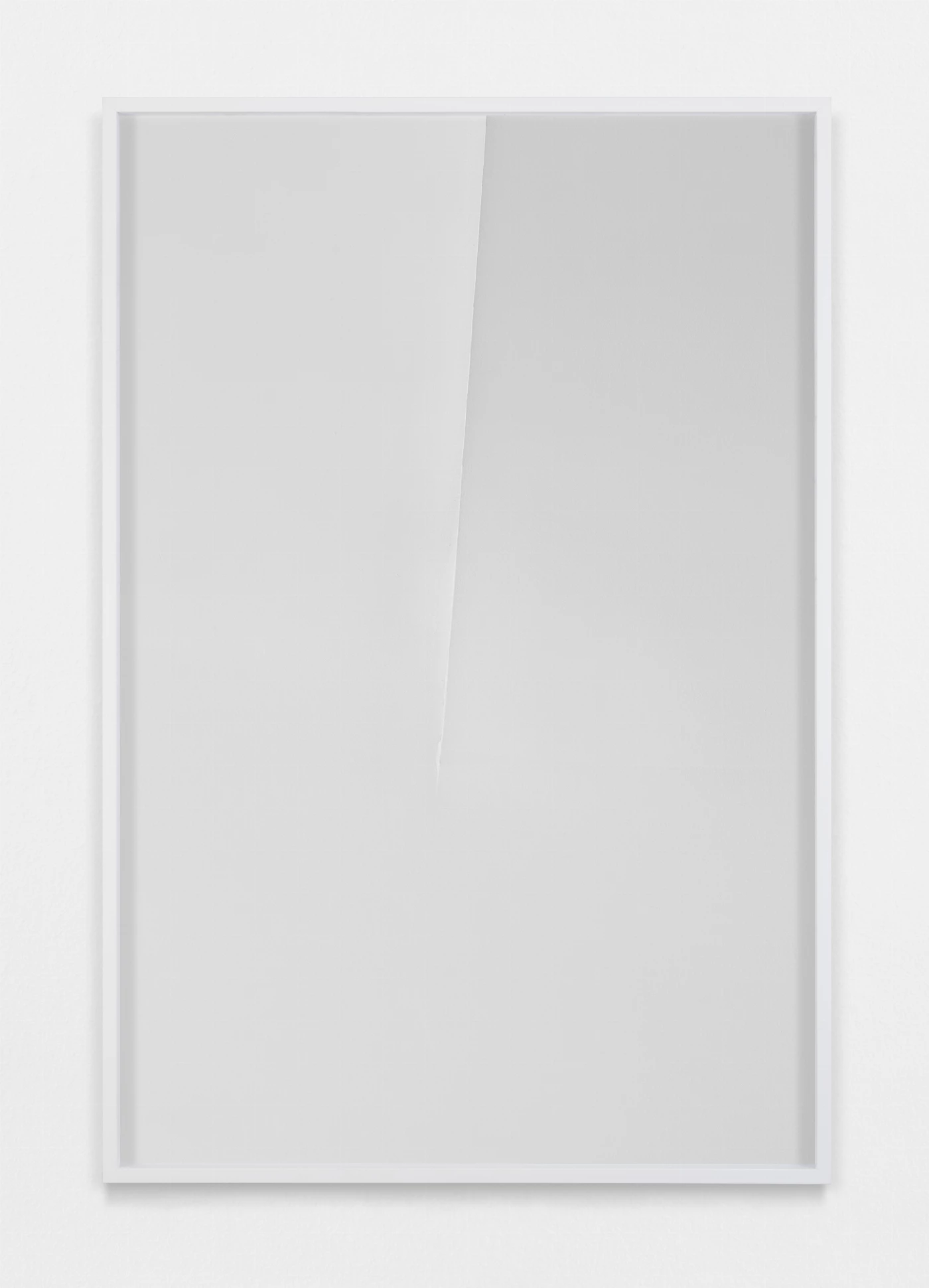
Mirrorworks is a developing series that constitutes one of my lines of research into the relationship between gaze and the representation of reality. It is made up of sculptural objects with a geometric appearance. I work with different forms of interrelation between layers of mirror, which causes the final objects to return fragmented and multidimensional visions of reality. The works absorb and mutate according to their location and orientation, and our position with respect to them, showing one image or another. Furthermore, they exclusively reflect the immediate present and, consequently, are incapable of containing memory. They show us a persistent and incessantly renewed now, a kind of continuous present. They are works that question the sense of perception; they should not be understood as sculptures, photographs, or paintings but as intermediate vision devices that distort the appearance of all of them.
Under the Shadows
During the lockdown period of the Covid-19 crisis, we were all forced to reduce our activity to a minimum and remain confined in our homes. Windows gained great importance during that period, as they were the element that allowed us to maintain a connection with the outside world. We all spent part of our time looking through our windows, and they became a new framework for observing reality, becoming almost a mirror, but not one to look into but one to look at. This is the theoretical context in which this series of images is framed, showing multiple possible variations on the effect of light on the glass surface of a window that, for a time, has been a projection surface for what was happening in the outside world.
Emptied Color
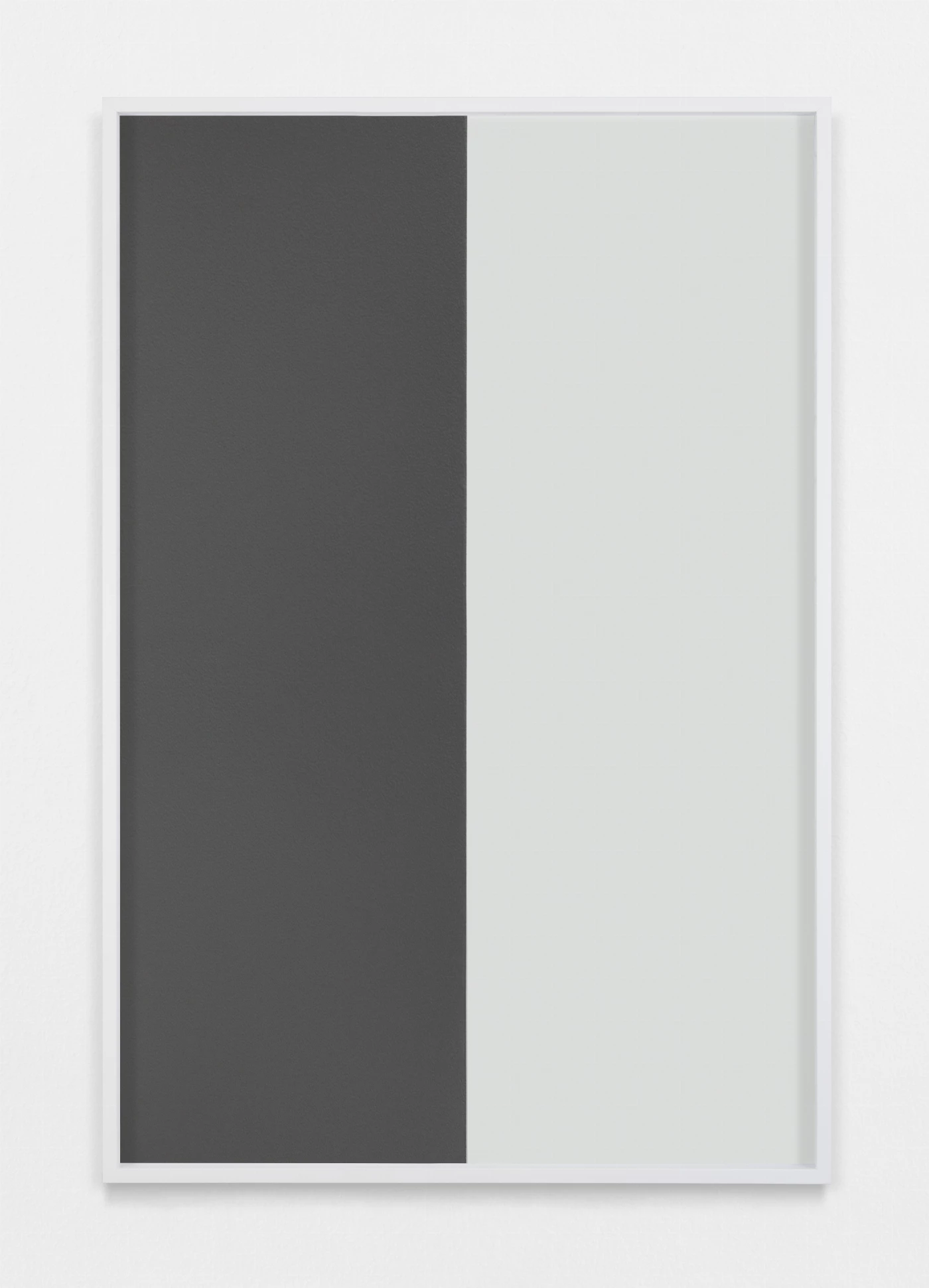
In the works of the Emptied Color series (2015-2020), I focus attention on the behavior of color in images according to the support and context in which we observe them. For the execution of these photographs, I have located and isolated monochrome spaces, with little visual content and with a range of tones limited to the most elementary colors of the visible spectrum, black and white. At first glance, they appear to be black and white photographs, but when we look closely at them, subtle color nuances emerge, which do not come from the space itself, but from the device used to capture them. Then, when the images are printed, we obtain variations in their tones, depending on the materials we choose for this purpose. Finally, there is the viewer and their unique way of interpreting color in the images, both for physiological reasons and for those related to their life experiences.
Zoom-In
Zoom-In is a project that focuses attention on the photographic printing process to reflect on the genesis of the photographic image, considering it from its material composition and not so much in relation to its load of meaning. The result is a group of abstract works, halfway between photography and painting. I use the materials typically used for printing photographs (photographic paper and printer inks), substituting the action of digital and mechanical devices (both capture and printing), and I emulate the functioning of this system with the action of my own body. I replace the printer's ink cartridges with a more archaic and rudimentary system (the mouth atomizer, a type of proto-airbrush used by Paleolithic peoples for cave paintings) with which, through mechanical and repetitive movements, I seek to imitate the machine's operation when printing.
Banana_swallows_cobblestones
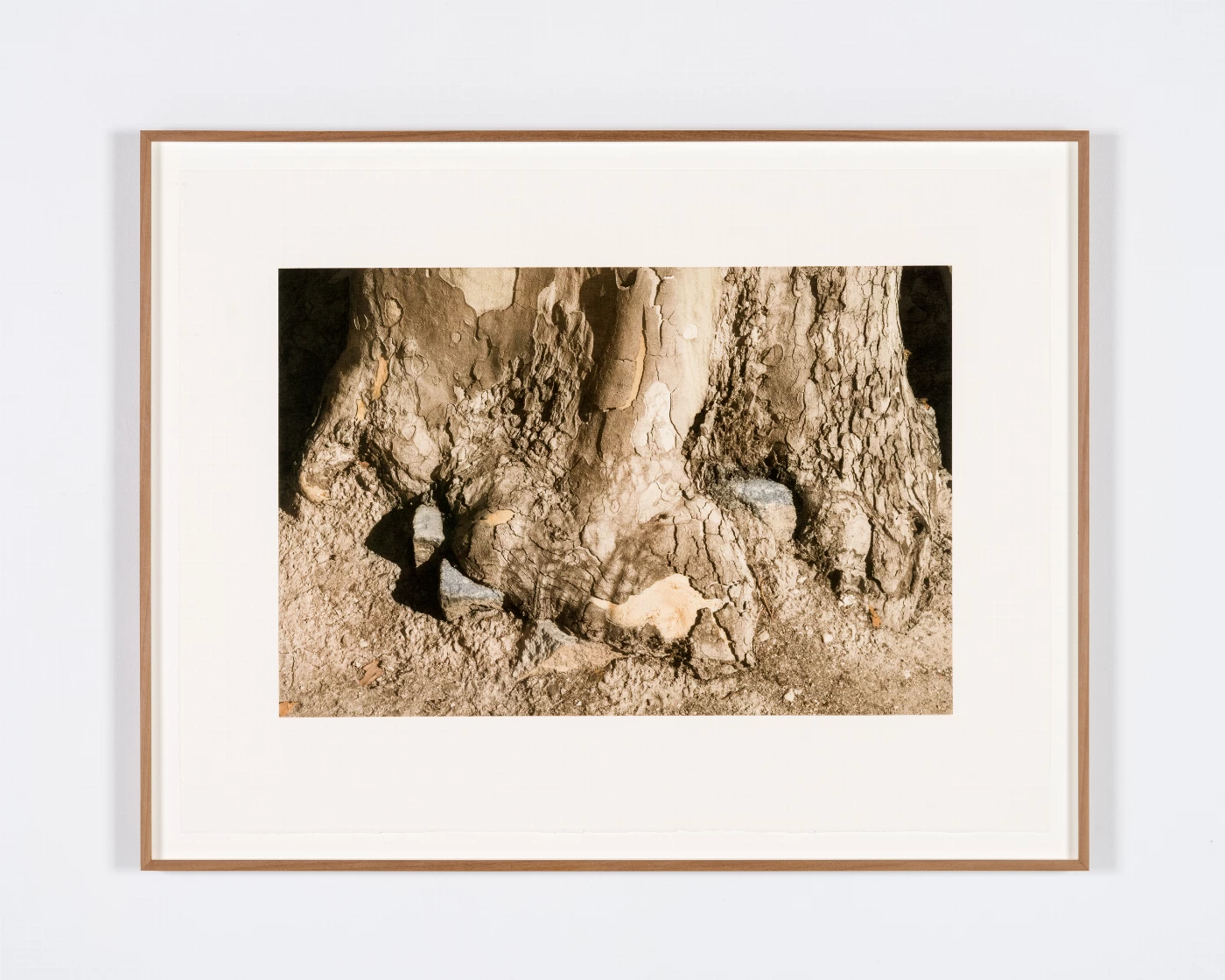
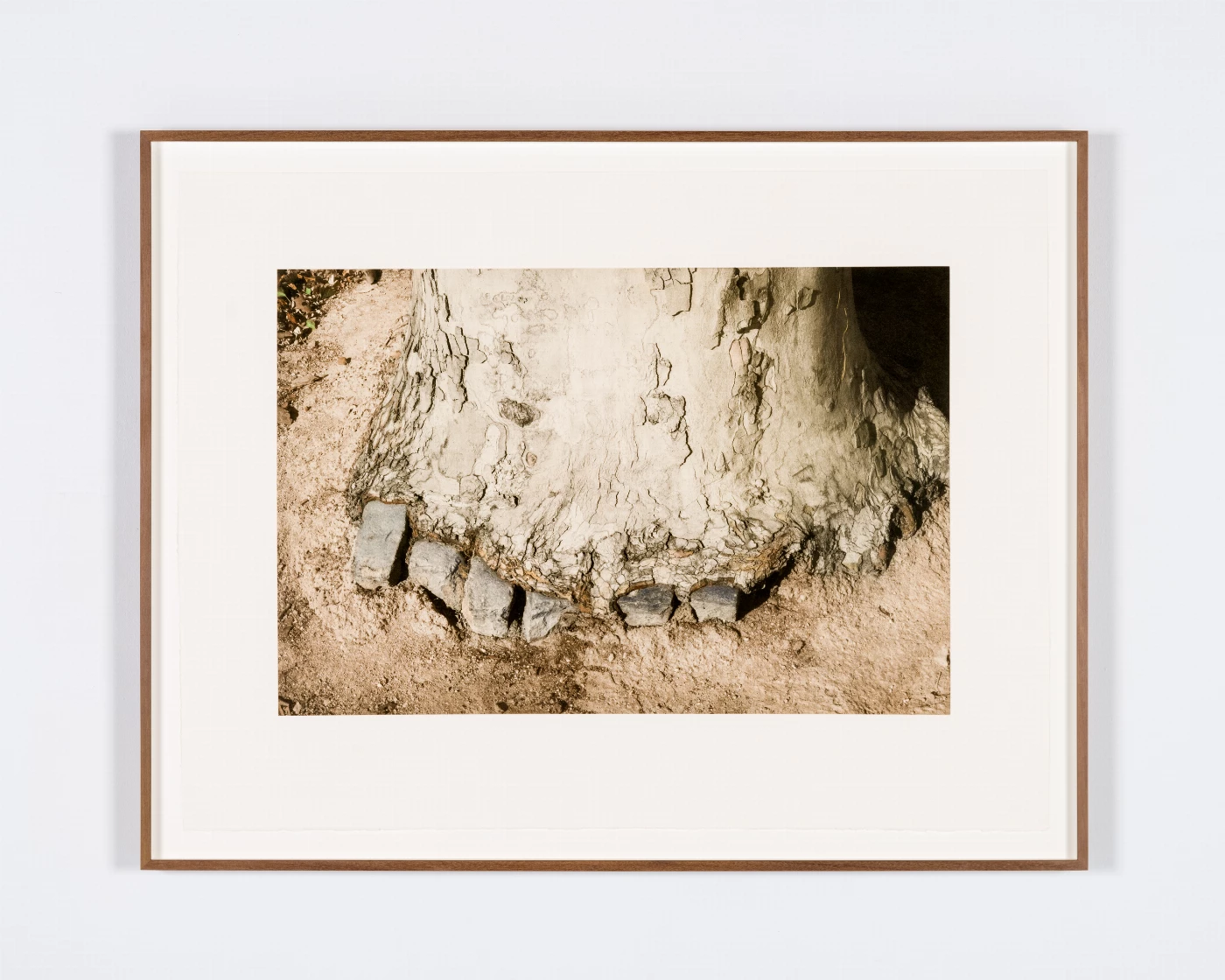
It reflects on a process that occurs in slow motion and on a small scale, in strata of tree-time, and evidences the tense relationship between humans and nature. At the same time, it functions as a metaphor, representing nature's slow but unstoppable response to the excesses of industrialization in our society. Observing the images in detail, we see that these trees were planted in an inappropriate location, too close to the adjacent homes, leaving little room for their roots to grow normally. Recently, when the sidewalk on the street where the trees are located was redone, larger tree pits were built in which the trees have more space to expand their trunks, revealing the chain of bad decisions that has led to this implausible situation, in which the plane trees and the cobblestones merge into an unfortunate mass of sculptural plasticity formed by m